
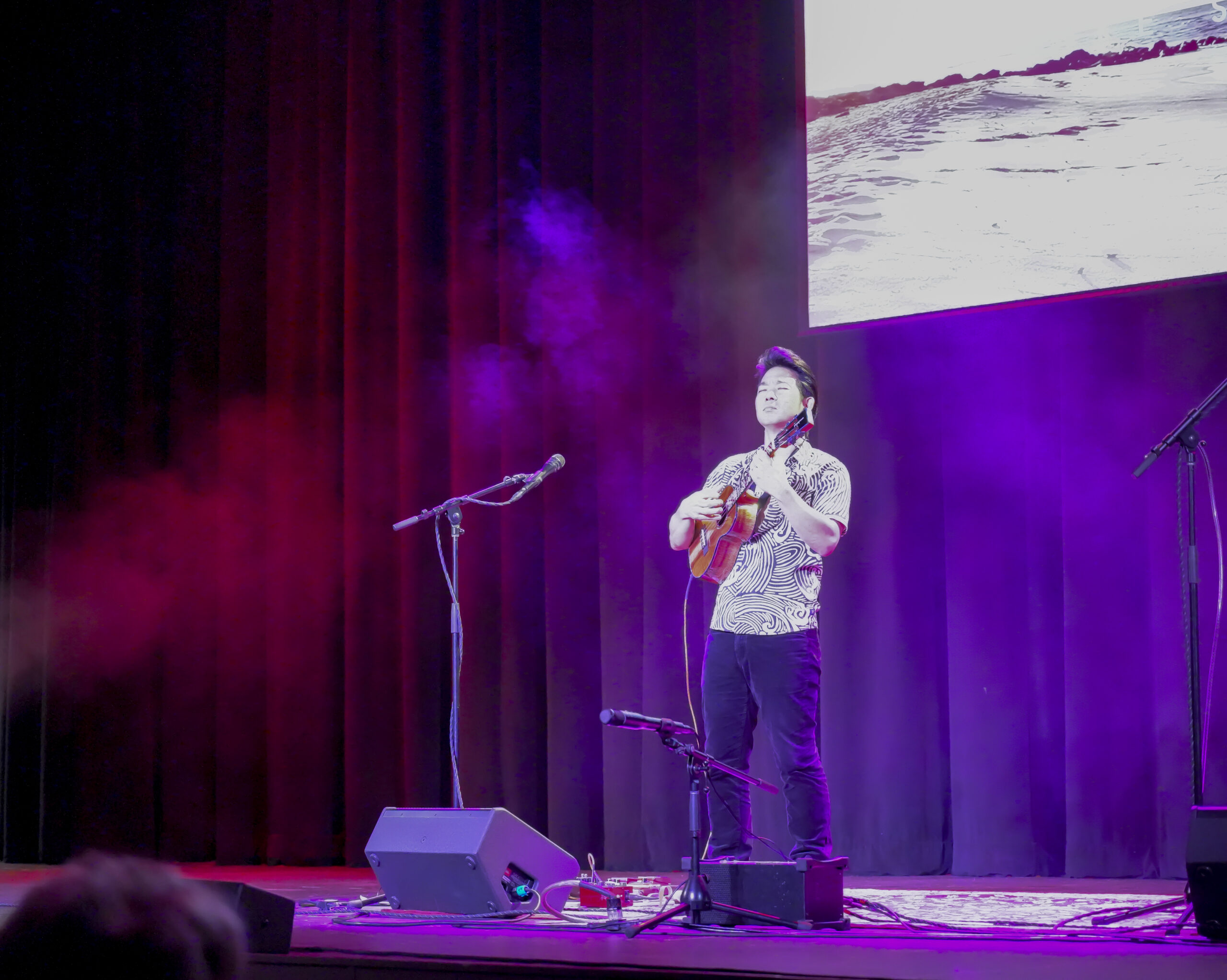
When ukulele player Jake Shimabukuro performed at the Theater at Innovation Square in April, he asked who in the audience had heard his first shows at the Rochester International Jazz Festival. A majority of hands in the audience of the packed 700-seat theater shot up. He then tugged on heartstrings with his toy-like instrument, weeping to a George Harrison tune, shredding to “Stairway to Heaven,” luring K-pop demons with an inspirational version of “Golden,” and smiling to a feel-good homage for the legendary Hawaiian steel guitar player Joseph Kekuku.
Yet his performance did something more: it triggered a specific nostalgia. The audience remembered the ukulele player, who was booked for the fest due to a viral YouTube video, as a relative unknown in 2008, when he performed two breakout sets at Montage Music Hall. They remembered how he stumbled upon the East End string shop, Bernunzio Uptown Music, and played a jaw-dropping, off-the-cuff jam between performances. And they remembered how Shimabukuro was hoisted to festival headliner status in 2009, where the small-statured, kind-natured ukulele player commanded the Kodak Hall at Eastman Theatre stage with his miniature instrument. And they almost certainly remembered his celebrated return to the jazz festival—now as a favorite with a following—in 2019.
Almost 18 years after he first charmed the jazz festival, Shimabukuro was back in Rochester, still attracting audiences who first discovered him there. The nostalgia felt that night in April—in a venue now connected with the jazz festival, but not during the jazz festival—was not simply for Shimabukuro, but for the feeling of discovery for which the jazz festival has come to be known. It’s the feeling expressed by the festival’s oft-cited motto: “It’s not who you know; it’s who you don’t know.”
Shimabukuro’s show was a reminder of discoveries past and of those to come.
Ahead of the Curve
Rochester’s jazz festival, which started twenty-five years ago and took a two-year hiatus due to the coronavirus pandemic, has a reputation for snagging artists on the rise. It all started with Norah Jones, whose album Come Away With Me swept the music charts, rising to #1 status in the months before she showed up in Rochester in 2002. Jones subsequently won Album of the Year, among other awards, at the 2003 Grammy Awards. It was a lucky booking for the festival’s inaugural year. And then it kept happening: Esperanza Spalding, Shimabukuro, Trombone Shorty, Samara Joy. All played here on the cusp of, or moments after, breaking out.
Mark Zeger, a Rochester-area trumpet player and longtime festivalgoer and volunteer, remembers that Max at Eastman Place was the hot seat for Norah Jones’s 2002 sets—and the lines were so long, he couldn’t get in. But a fortunate connection in the restaurant led to a “Goodfellows” moment, sneaking through the kitchen and into the bar, standing pressed up against two glass walls to catch the newly famous singer.
“That was the perfect example of, ‘it’s not who you know,’ but at that point, everybody knew,” he says.
He also remembers that, in 2010, Trombone Shorty (the stage name for the New Orleans brass player Troy Andrews) blew the roof off the Big Tent, which is known as the casual, party venue, not necessarily where the festival’s premiere acts are scheduled. “That was ridiculous,” he recalled. “That was one of those things where everybody who left the tent went to tell a friend.”
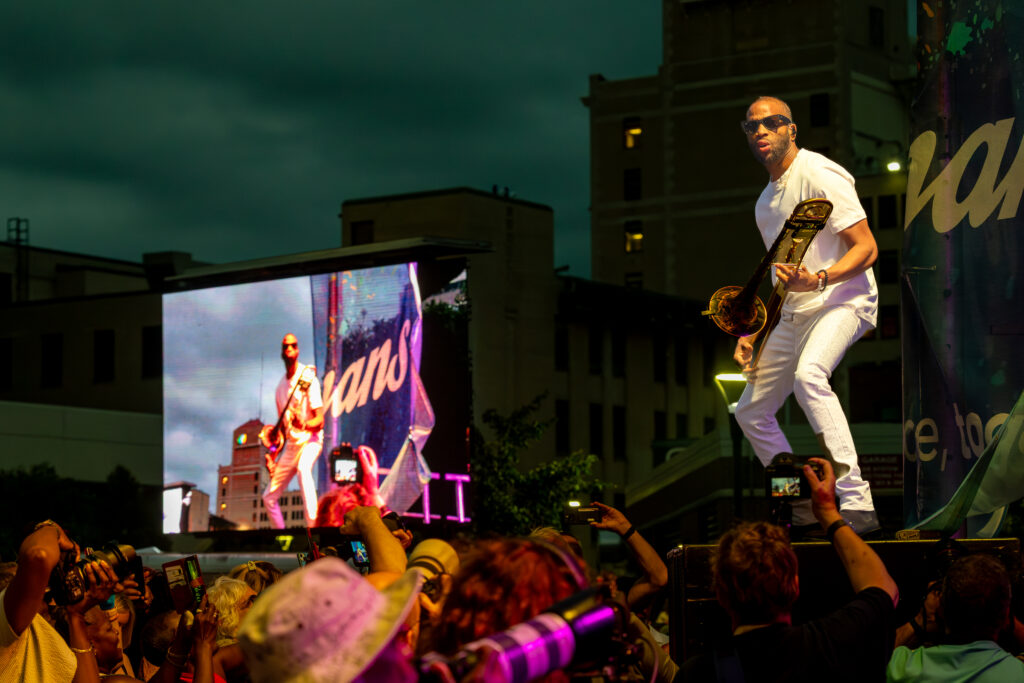
Trombone Shorty’s 2010 album Backatown, released only in April of that year, was soaring up the Billboard charts and would earn him a Grammy Award nomination. He returned to Rochester in 2011 as a free headliner show.
Trombone Shorty also returns this summer for his 10th appearance, closing out the festival on June 27. A crowd favorite, he’s likely to draw the festival’s largest audience at Parcel 5.
But more than big names, the festival has given audiences permission to explore jazz beyond what they already know and find artists whose music sparks excitement. Those discoveries remain firmly embedded in jazz festival attendees’ collective memories.
For Whitney Brice, a Rochester native who began attending and volunteering at the festival in the 2010s, it was an unplanned stop at a club venue she hadn’t yet visited, the Lutheran Church, that led to a discovery. “We went and were just mesmerized,” she says.
The artist? South Korean singer Youn Sun Nah. Nah returned at the 2017 festival as a must-see show.
“She’s three-dimensionally engaging,” remembers Brice. “You feel like it’s an experience watching her perform. People all around us were very awestruck by the power of her musicianship and her presence. She was an unusually noteworthy experience.”
What got Brice into the Lutheran Church was a club pass, the festival’s ticket to discovery.
A Ticket to Discovery
Many jazz festivals charge a single entrance fee or offer an all-access pass. For example, at the Newport Jazz Festival, attendees pay for the day or all three and get access to all four of its stages. But most of those festivals don’t have upwards of ten venues and don’t last nine days. With staggered showtimes and a walkable layout, club pass holders can hear several shows each day if they plan carefully. (Editor’s note: I have been able to catch parts of as many as seven shows on a single day with the club pass.)
That means there’s a low barrier for exploration. You already have the pass, so you might as well stick your head in a venue with an artist you don’t know.
The idea for the club pass originated with Newport Jazz Festival’s longtime director, George Wein. Rochester Jazz Festival co-founder and co-producer John Nugent was working with Wein to produce concert tours with major artists when, in 1999, Nugent told Wein he was considering starting a jazz festival in Rochester.
“Give it away, kid,” said Wein.
“What do you mean?” asked Nugent.
“Give them a pass, let them go to everything.”
A discovery festival, Nugent thought, with some big-name acts sprinkled in as a draw. And so, he gave it away. In the festival’s first year, the club pass cost $25 for 25 concerts. Then next year, $50 for 50 concerts. And so on, until the festival grew to host roughly 200 sets of music over nine days.
“We’re one of the only events in the country, if not in North America, that has this amount of music under one pass,” says Nugent.
Rochester trumpeter Zeger says even with the club pass, you can’t see everything. But “if you don’t like something, you leave. You can be as open as you can be open-minded.”
Zeger attributes the discovery made possible by the club pass to economic realities—artists who aren’t as well-known are cheaper to book—and to the festival director’s connections. Nugent rose through the ranks as a jazz tenor sax player in Canada, who, in addition to playing with several greats, started producing concerts. In addition to Rochester, where he relocated to run the festival, he was the artistic director of the Stockholm Jazz Festival, a connection that led to the once-popular Nordic Series at Rochester’s jazz festival. Nugent routinely scouts for talent to bring to the festival.
But the club pass price has increased significantly over the years from its initial $25. Nine-day club passes now run around $450 (currently $469.48, which includes service fees). New to this year, the ten club venues include Kodak Hall at Eastman Theatre, which used to require an extra ticket but now will host acts such as the legendary Bob James, Latin jazz master Arturo Sandoval, and the contemporary Japanese sonic wonder Hiromi, artists who might’ve otherwise been separately ticketed headliner shows. (There are still, however, paid headliner shows.) No longer ‘giving it away,’ the festival argues that, for the number of shows and what those shows would cost individually elsewhere, it’s a great deal.
“The only thing with the club pass that’s frustrating is that I can’t always make two things a day,” says city resident and festival goer Anne Tippet. “So, sometimes I don’t feel like I’m getting my money’s worth.”
To combat this, the festival now offers a more affordable three-day pass and, new to this year, a one-day pass. Tickets for individual club concerts are also available to buy for $30 at the door. Festival co-producer Marc Iacona cites rising costs since COVID, everything from artists’ fees to insurance and staff compensation, as a reason for the increasing club pass prices.
How the price of the club pass, combined with record-high gas costs and other economic uncertainties, will affect the number of attendees this summer remains to be seen. But the one unchangeable requirement for discovering artists at the jazz festival is to be present, sitting in the venue where the music happens.
Future Favorites
The feeling of discovery requires an element of surprise, of the unexpected. Nonetheless, predictions are open for which artists might be this year’s festival finds.
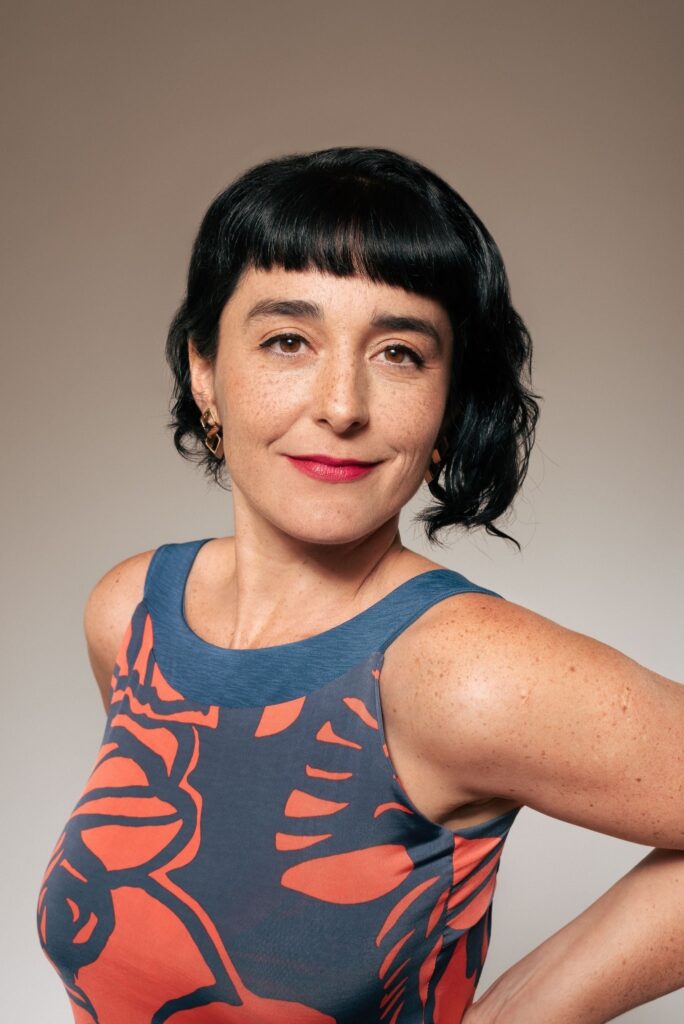
Camila Meza was one of the first artists who came to mind for Nugent. Meza, a Chilean singer and guitarist, takes the Latin-steeped world-music genre she inhabits and places it in conversation with jazz currents. With simmering electronics and sweeping harp effects along with her sensual vocals, her songs evoke a kind of magical realism. She’s worked with artists ranging from Paquito D’Rivera to Pat Metheny. She performs on two sets on Thursday, June 25, at Kilbourn Hall.
Another contender might be the Baltimore-based trumpeter Brandon Woody. Respected in Baltimore and the larger D.C. area since first on the scene in 2018, Woody’s talents were finally scooped up by the historic Blue Note Records, with whom Woody released a debut album backed by his Upendo band in 2025 called For the Love of it All. ‘Upendo’ is Swahili for ‘love,’ but it does more than just evoke emotion. It situates the music within the lineage of great African artists. The music is open and seeking, with that sheen of mastery that you know when you hear it. Playing on the opening night of the festival at the Theater at Innovation Square, this year’s festival won’t be the last you hear of the 27-year-old trumpeter.
Pinning down an artist like Brittany Davis, another potential festival discovery, is hard; they don’t stick to one genre. The blind, non-binary Seattle singer and keyboardist is a chameleon, gliding between soul, hip-hop, rock, and beyond, as if questioning why anyone would want them in a single lane. But their latest album, Black Thunder, is undeniably jazz, with complex chords and a honed voice that, in tone and social message, conjure Nina Simone. Fans of vocalists who ride in popular lanes will have to make a hard choice on Friday, June 26, between Davis, at the Montage Music Hall, and festival headliner Gladys Knight (a separately ticketed headliner show).
And those are just a few of the several artists on the docket who could emerge from the loaded schedule. Nugent has published his recommendations on the festival’s site, but as for the next big discovery, he says, “it’s a lot of serendipity.”
“I’m not a scientist. I’m just a jazz musician who really learned how to represent himself back in the day when I made my own records and produced tours for other musicians who didn’t have the ability to know how to negotiate or make a deal for themselves to go play somewhere.”
Now, he brings that talent to Rochester.
Favorite Artists, New Again
Jazz festival nostalgia was also on tap in April at the Fanatics Pub in Lima, just a half-hour south of Rochester. In a town with a single traffic light, guitarist Stanley Jordan played a solo set to a sold-out audience.
Jordan may not have been a complete unknown when he first performed at the Rochester International Jazz Festival in 2010—his breakout was in the ‘80s when Blue Note Records, under a brand-new producer, released his major debut album that ended up topping charts for a record number of weeks. His career just kept ascending from there. But if any Rochester audiences didn’t know him before his Rochester jazz festival club-pass shows, they certainly did afterward.
Jordan is known for his innovative tapping technique, in which he treats the guitar fretboard as a keyboard, scaling it with toccata-like fingers, layering chords and melody single-handedly. Jordan is virtuosity personified. He was an instant talk of the festival. He returned two years ago to eager audiences, recreating and riffing on Jimi Hendrix’s music.
But in April, Jordan did something unexpected. With one guitar propped up on a stand and another around his neck, he proceeded to showcase his tapping on both instruments simultaneously, his hands overlapping and shifting in double-vision across the two fretboards. The room was enraptured at the seemingly impossible feat.
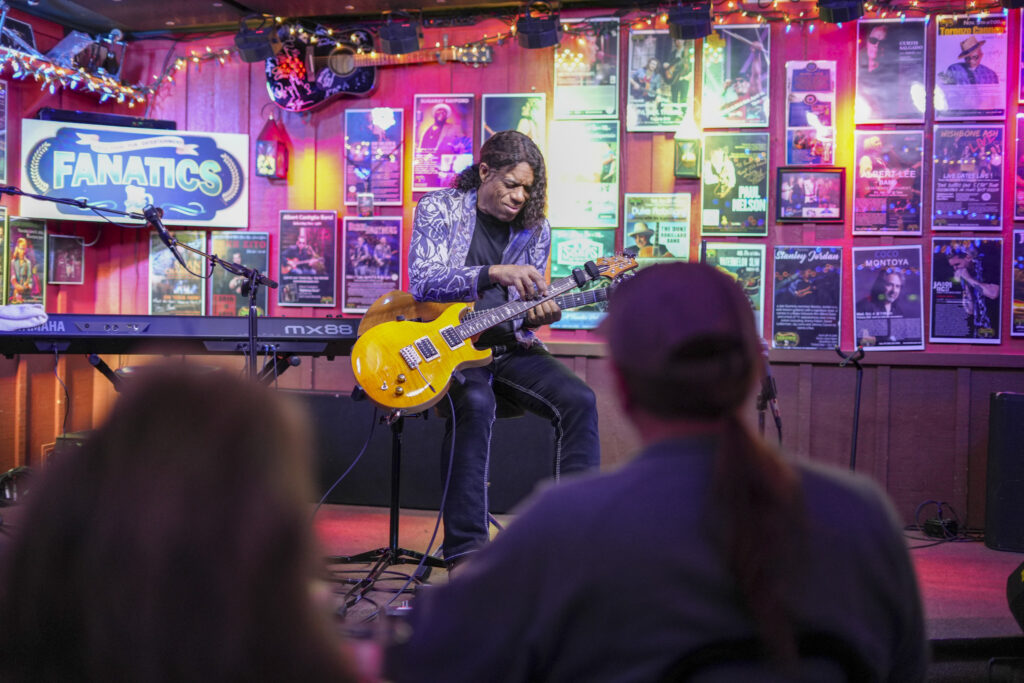
Jordan’s show didn’t simply trigger nostalgia for past jazz festival discoveries. It proved that the best artists—even a 66-year-old guitarist with nothing to prove—are always pushing forward.
As we move into festival season, Jordan is a lesson that discovery is not contingent on the latest crop of up-and-comers. Even longtime favorites might surprise.
_______
Hear recent albums by Camlia Meza, Brandon Woody, and Brittany Davis:


Be First to Comment