
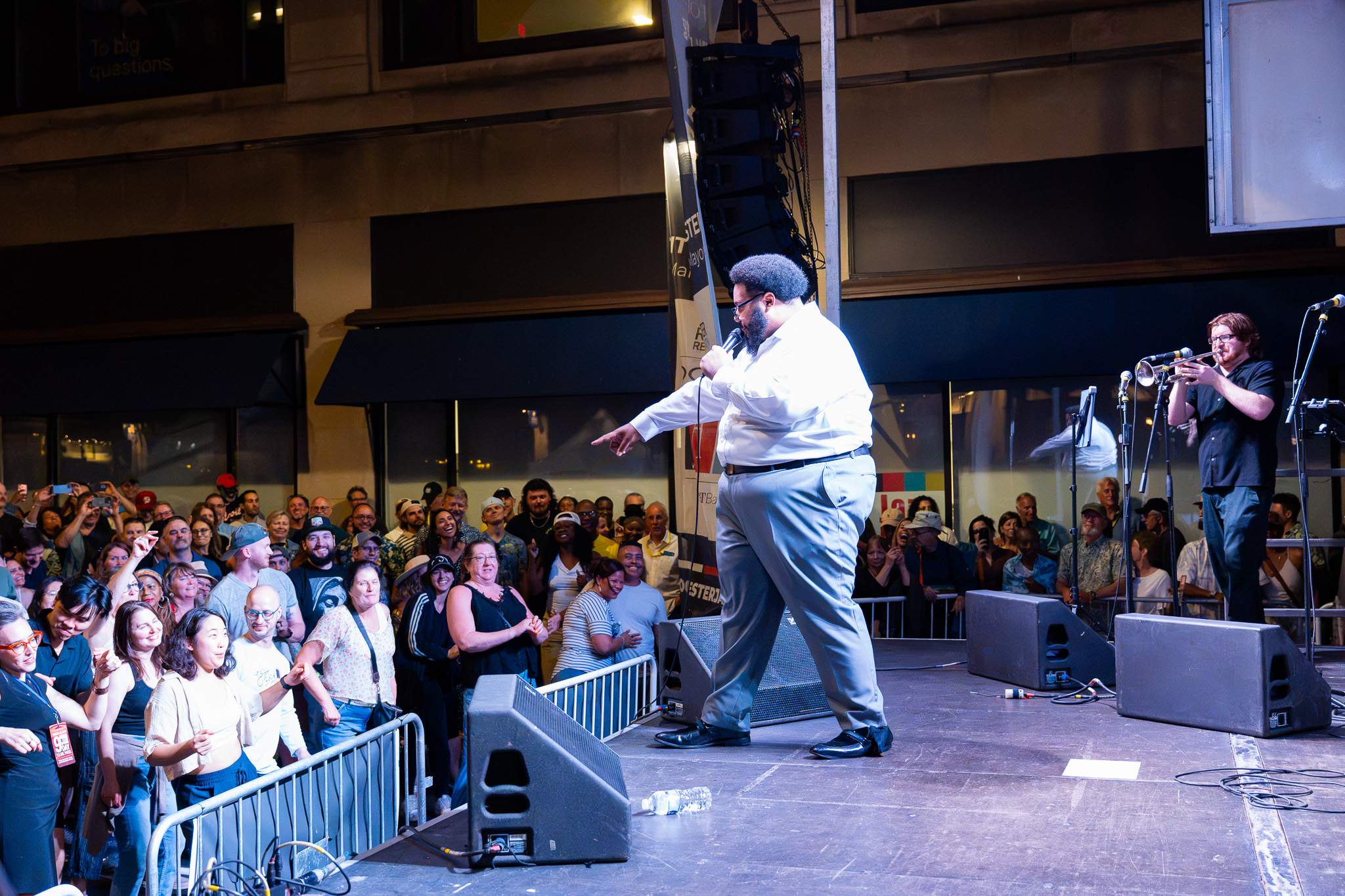
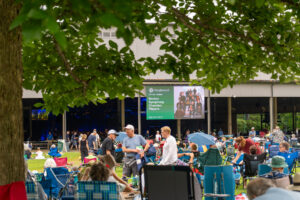
Had we prayed to the sun gods for good weather, it’s unlikely they could’ve produced a day as perfect as the final one of the Rochester International Jazz Festival on Saturday. With a high of 77, minimal humidity, and barely a cloud in the sky, it was the perfect backdrop for seven free shows, in addition to the high school and college bands on Jazz Street. People flocked to Rochester’s downtown corridor to enjoy the atmosphere. The weather gods mostly came through for us the entire nine days of the festival, offering easy temperatures to wander around the East End of the city, with only a couple of days of less-than-optimal, but nothing too offensive, weather. (Most of the wind and rain happened either before the festival or earlier in the day.) And it was a stroke of luck that the heat dome over our region didn’t drop down on us until this current week, just missing the festival.
According to the festival, there were 211,000 attendees over nine days. There were some grumblings that the festival’s attendance had cooled, that usual club pass buyers were more hesitant this year with rising costs, and that there was a decrease in out-of-town visitors, deterred by the high prices of both tickets and travel. But here are some guidepost attendance figures: The first festival in 2002 had 15,000 attendees; 2007 had about 121,000 (over a 50% increase in attendance from 2006); and 2013 had around 195,000 attendees. (I chose 2007 and 2013 as the first and last years I covered the festival for the Democrat and Chronicle.) The festival’s early growth was impressively swift, and numbers have held relatively stable across the last decade or so. But we are still seeing indications of growth. Attendance numbers, however, are always a slippery science. It also doesn’t tell us much about ticket sales. I overheard conversations among patrons about whether the city, in terms of customers, can continue to support the costs of a nine-day festival and about the potential benefits of shortening the festival.
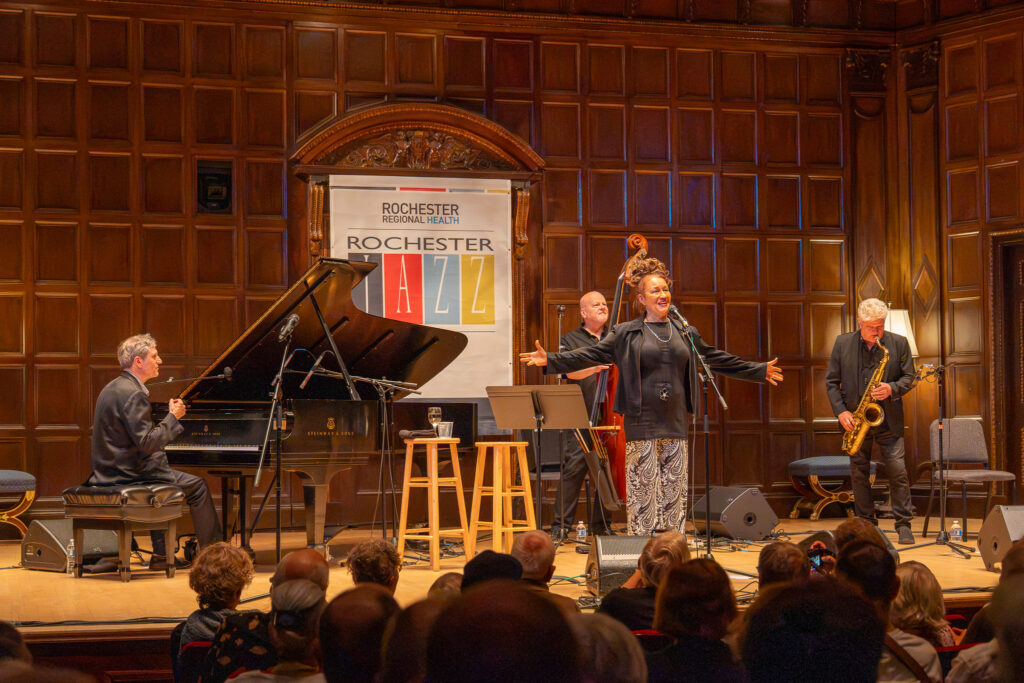
Saturday’s ideal weather also laid the foundation for a night to lie low on the club shows to take in the high-quality free acts. Not that I avoided them completely. I did hear the first 25-minutes of Canadian vocalist Holly Cole at Kilbourn Hall. In the early show, she praised Kilbourn Hall as magnificent, saying “it sounds wonderful up here,” before launching into a fascinatingly unhurried, stylized version of “Too Darn Hot,” which is usually played blazingly fast. Cole has a distinctive voice with a childlike quality that has also been patinated by age. And her tenor saxophonist—someone John Nugent said he’d grown up playing hockey with in Canada—doubled on the bass clarinet, adding a noir-jazz timbre to the rolling lick that underlined the tune. Cole’s arrangements seek new tempos and timbres for the Great American Songbook, resulting in fresh takes on music that could’ve otherwise been stale. I had flashbacks to dancing to her smooth swing in the early 2000s, where her original arrangements and whimsical voice inspired me to move in new ways.
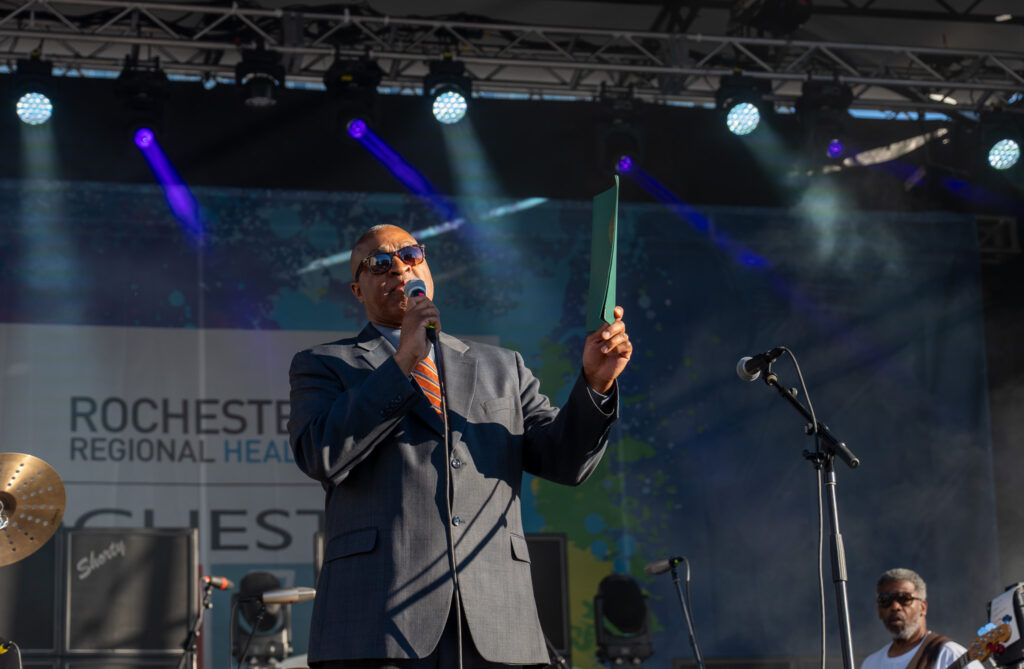
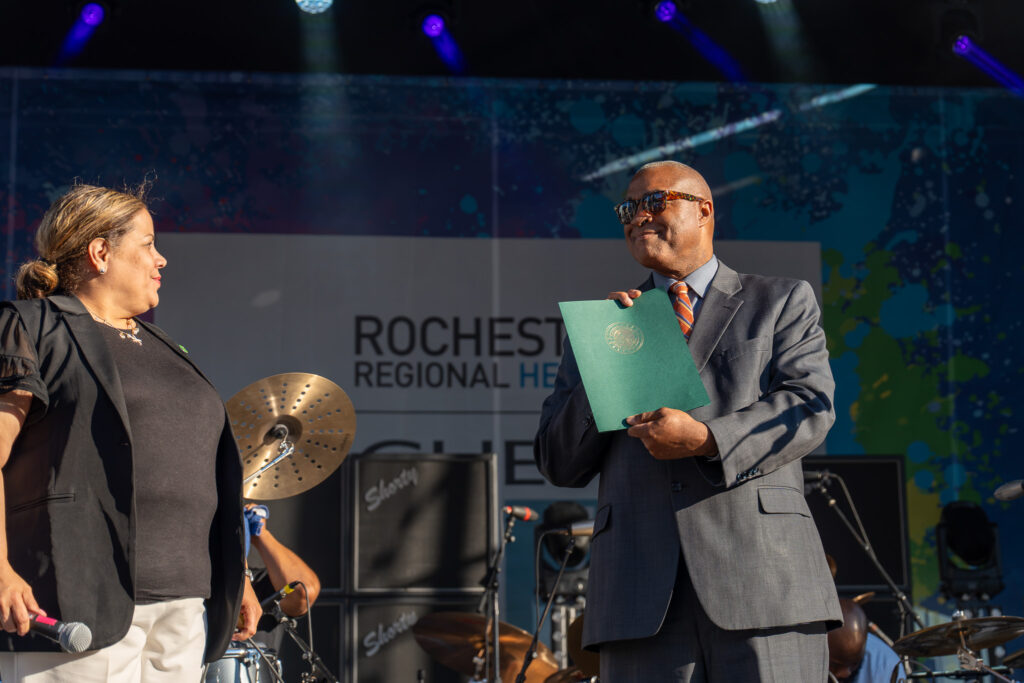
I ducked out early to catch the city bestowing a proclamation on “The King of Jazz Street” Derrick Lucas at Parcel 5. It’s not ‘Jazz Festival’ in Rochester without Lucas, the music director of Jazz 90.1FM, greeting jazz fans and interviewing artists at the station’s booth, strategically placed on Jazz Street by the Kilbourn Hall entrance and between the free stage and the food trucks. I’ve been fortunate to call Lucas a fellow media colleague since at least 2007, and we’ve even traveled around for jazz festivals, where I’ve assisted with arranging artist interviews and photography for Jazz 90.1 as a volunteer. Lucas lives and breathes jazz, on and off the air, and he’s often an insider source for me about what to pay attention to in the jazz world at large. I don’t think I can fully impress upon Rochester how fortunate we are to have a dedicated jazz radio station with staff who know how to geek out over this music in the best way. I urge everyone to listen to the station and support its efforts year-round. The station does so much to support the public’s engagement with jazz during the festival, from the info booth to introducing artists at various shows to producing an archive of video interviews with artists while they’re in Rochester. I wasn’t going to miss catching Lucas receive a much-deserved award from the city for his work supporting jazz in Rochester, New York.
In my only other indoor show of the night, the Count Basie Orchestra in Kodak Hall in Eastman Theatre Saturday night connected me to my jazz roots. I started triple-stepping and swinging out in the late 1990s and early 2000s, when I was swept into the youth swing craze inspired by a Gap commercial and the popularity of neo-swing bands like the Squirrel Nut Zippers. If Cole’s performance inspired original movement, it was Count Basie’s music that inspired me to learn the dance’s foundations and history. Basie’s music, with its underpinning bounce, is foundational to swing dance. And it was the great big-band standards that encouraged me, a clarinetist, to try playing saxophone and jazz (poorly, but with a lot of enthusiasm) in high school.
On Saturday evening, the band stayed firmly ensconced in the big band swing tradition but with panache and some humor (the trumpet players, for example, stood up and down at wacky times, sometimes pretending to play their horns backward). Five-time Grammy-nominated singer Carmen Bradford, who was discovered by “Count” Basie in the 1980s when she was only 22-years-old, joined the band on several tunes. And the two Eastman School of Music alums in the band, saxophonist Dave Glasser and trombonist Isrea Butler, were fittingly featured with their sections and in front-of-the-band solos.
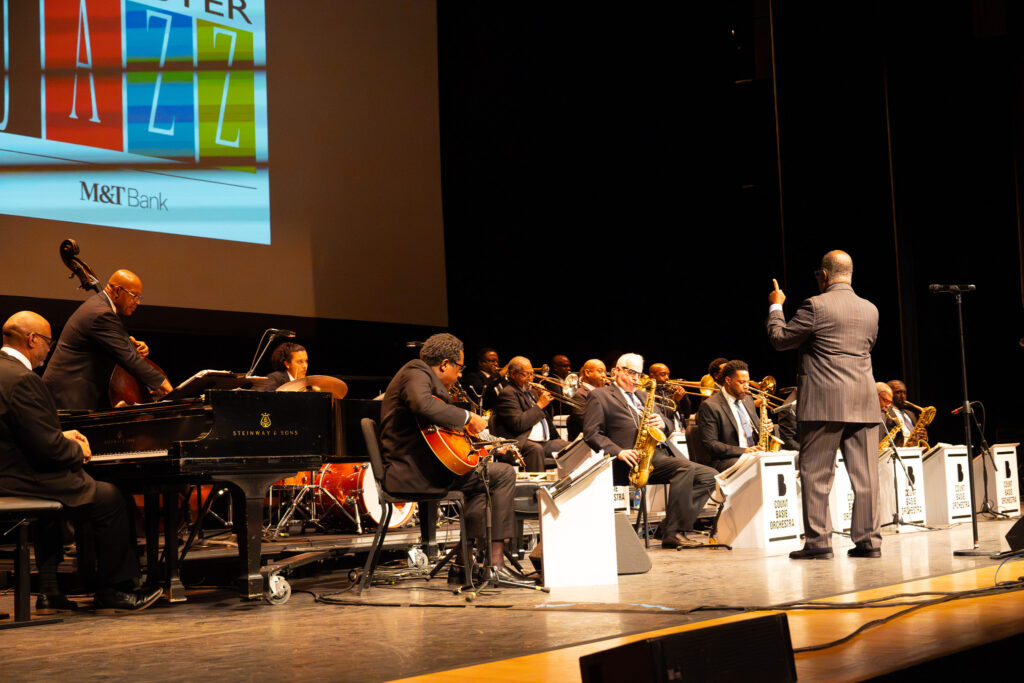
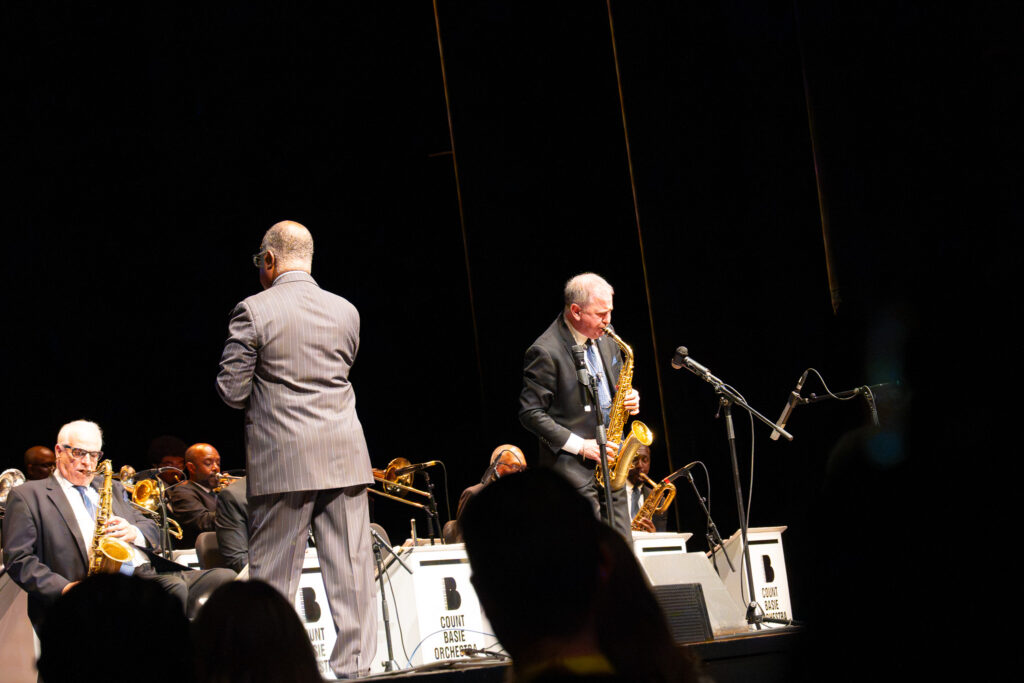
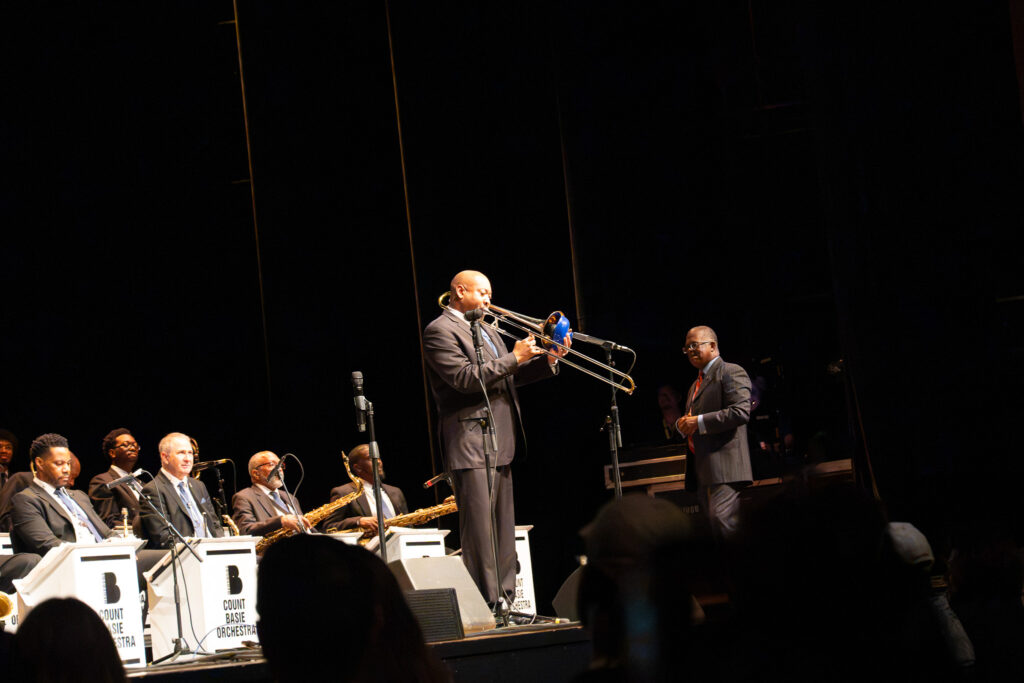
The band, which began in the 1930s, has done a fine job of holding the traditional line, but it always feels incongruous to me to hear an ensemble like it in a concert setting. Historically, this music existed for dancing and was inseparable from the Harlem dance clubs where it found a foothold. It’s worth questioning what’s lost when we pluck the ensemble and music out of their intended purpose and plop them on a sacred-like concert stage, as if we’re gawking at them from behind museum glass. It divorces us from the embodied experience that we’re meant to have to the music, which would act as a portal to a deeper understanding and appreciation.
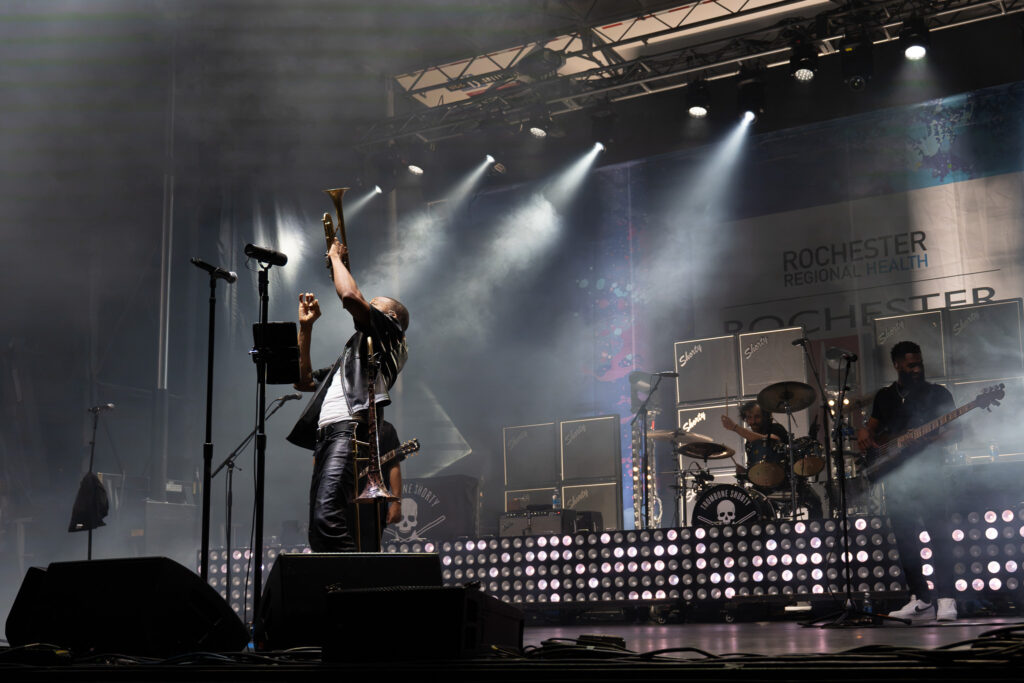
Feeling moved to swing my hips a bit, I left the gilded concert hall and headed out to the chill atmosphere of the free stages. I caught just enough of Trombone Shorty’s 10th appearance to nearly lose my hearing from the overly amplified music that wafted across the downtown corridor in waves of booms. The showman darted around the stage and generated a sonic mass of sound on whatever instrument was closest, whether it was a trombone, a trumpet, or the drums. Audiences in Parcel 5 were, as expected, shoulder to shoulder, with Trombone Shorty attracting his typical large Rochester following. The music is a popular jazz style that incorporates the beats and concert production of a rock act. Feeling a little claustrophobic, I decided to follow a lead that the guitarist at the Jazz Street stage was worth checking out.
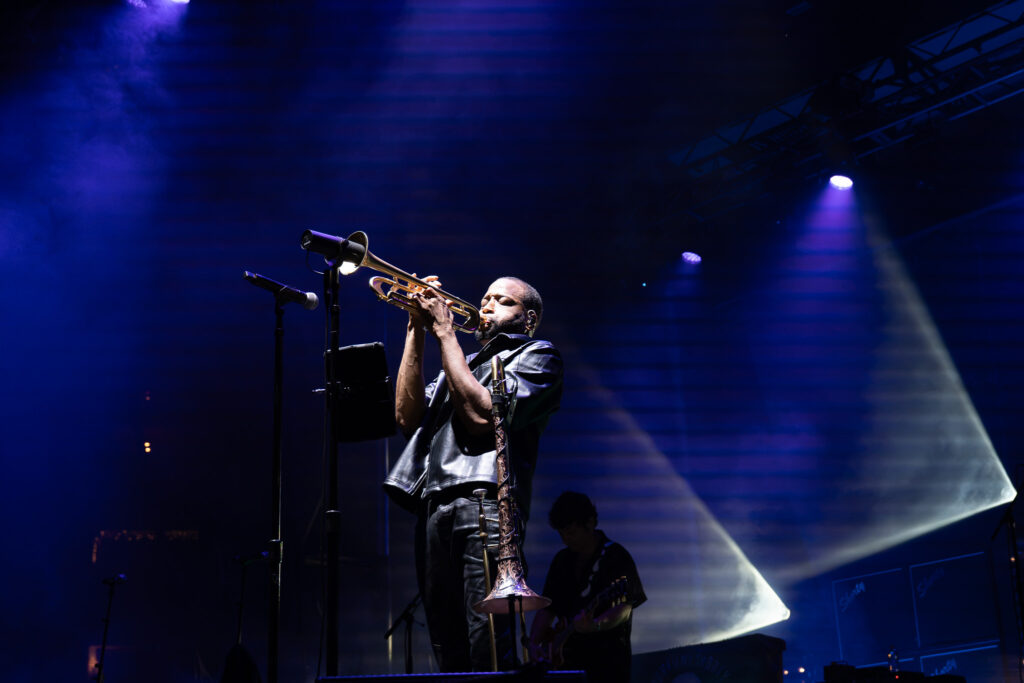
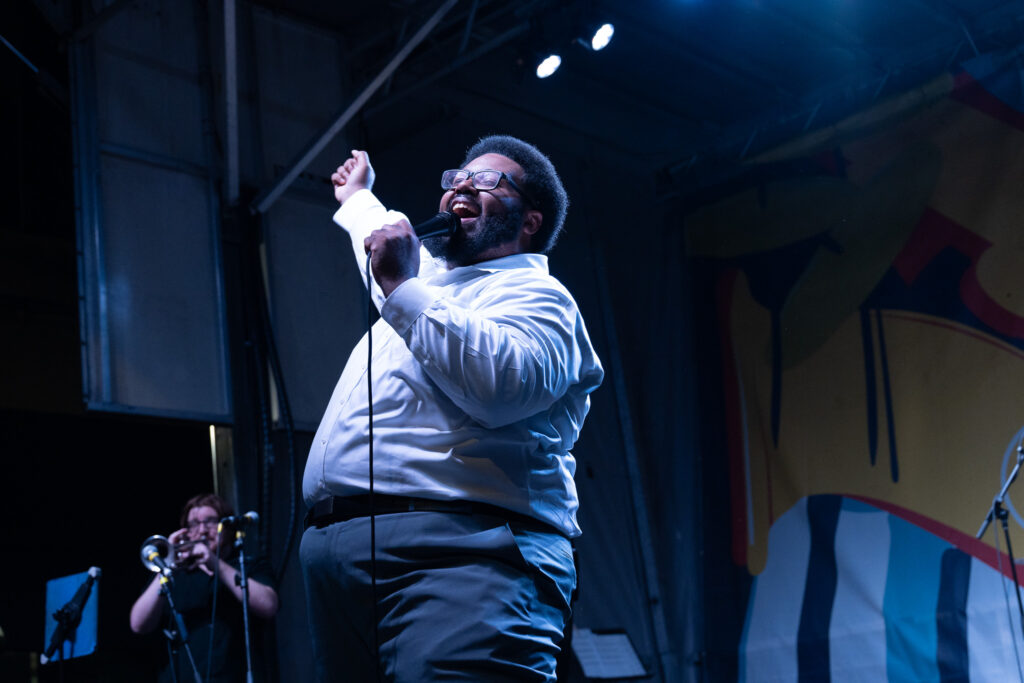
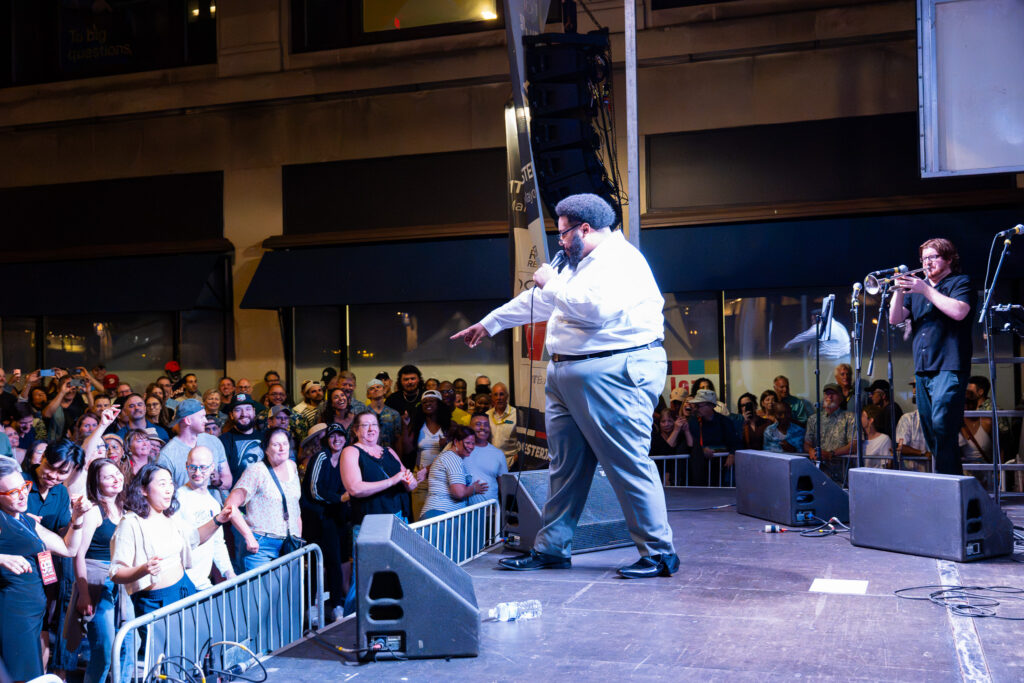
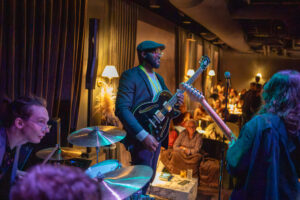
It’s absolutely fitting that my final show of the 2026 festival was an artist I’d never heard of, but who ended up being the standout of the evening. DK Harrell is yet another Louisiana-born musician, but who embodies the blues of artists like B. B. King and Muddy Waters. In opposition to Trombone Shorty, who was playing New Orleans’s jazz festival since he was a little kid, DK Harrell only broke out as an internationally recognized artist after being unhoused for a period in 2022–23. The sweet blues he and his band produced, along with his flamboyant stagecraft, at one point dropping his mic from all his grooving and booty-rollin’, had all of Jazz Street up on their feet. I even put down my camera gear to get some dancing in alongside some of my swing dance friends. It’s not who you know, as they say at the RIJF.
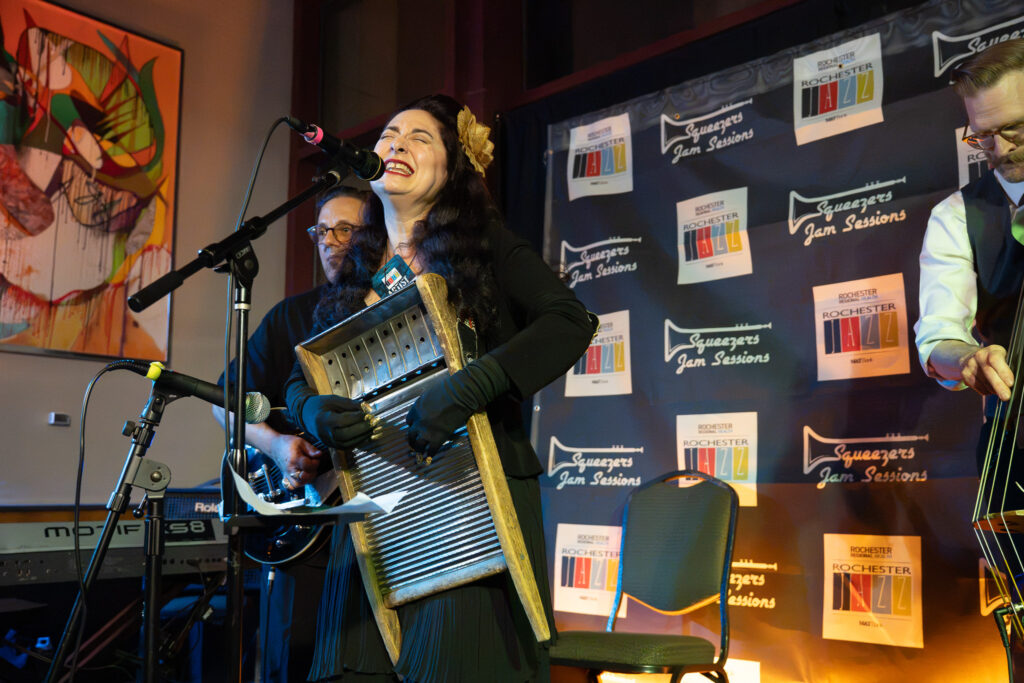
More discovery happened at the late-night jam at the Hyatt, where washboard player and singer April Mae and her June Bugs band got up to jam. I did not make it to their shows in Montage on the final night of the festival, so I was happy to get a taste of their highly entertaining vintage swing, which got the late-night warriors toe-tapping and kept the energy from waning into the morning hours.
That’s a wrap on the 2026 Rochester International Jazz Festival
It’s safe to say that Hiromi topped the shows of the festival for me, but other standouts were: Cécile McLorin Salvant, Alexa Tarantino, Paul Cornish, Brandon Woody, and Sarah Hanahan. But every artist I heard brought something worthwhile to my ears and senses, so I thank all the artists for sharing their music with us in Rochester.
—
I want to offer a sincere thank you to all who read, shared, and otherwise helped get the word out about Rochester Overture during the Rochester International Jazz Festival, and to those who offered words of encouragement and gratitude. I heard so much excitement from so many about having something like this start up and how much it is needed in our artistically rich community. A publication like this does not exist without a community willing to get behind it, and I am so moved by the way Rochester has already embraced this venture. And we had a small but robust contingent of local writers and reviewers, all in conversation about the music, from JazzRochester’s Greg Bell’s reflections and photos, to the wonderful previews and concert recommendations from longtime D&C reporter (and former colleague and friend) Gary Craig, to the witty writing of Jazz 90.1’s audio-engineer-turned-music reviewer Scott Fybush. We filled in each other’s reporting with our varied interests and perspectives, which is what having a community of arts writers is all about. But it needs to happen the other 356 days of the year. I hope this publication can fill a void in arts coverage, and I’m looking forward to adding more voices as it continues to grow. You can support the effort here.
A special thank you also goes out to my family. Someday I will write an article about the challenges of being a music critic and a mother. In between bouts of writing and photo editing, I’ve been fielding the “hey, mooommm…” interruptions, managing school and daycare schedules, setting up play dates when public school ended mid-week, and even somehow fit in packing up a kid for sleep-away camp. And I wasn’t home to enjoy family dinners or tuck my kids into bed for nine straight nights. Sleep was in short supply between my dual roles as reporter and mom (which might have something to do with any typos). And even on the Monday after, I was balancing writing with kiddo’s doctor’s appointments. My selfless husband and incredible in-laws, along with a wonderful babysitter, made it possible for me to cover all nine days of the festival.


Be First to Comment