
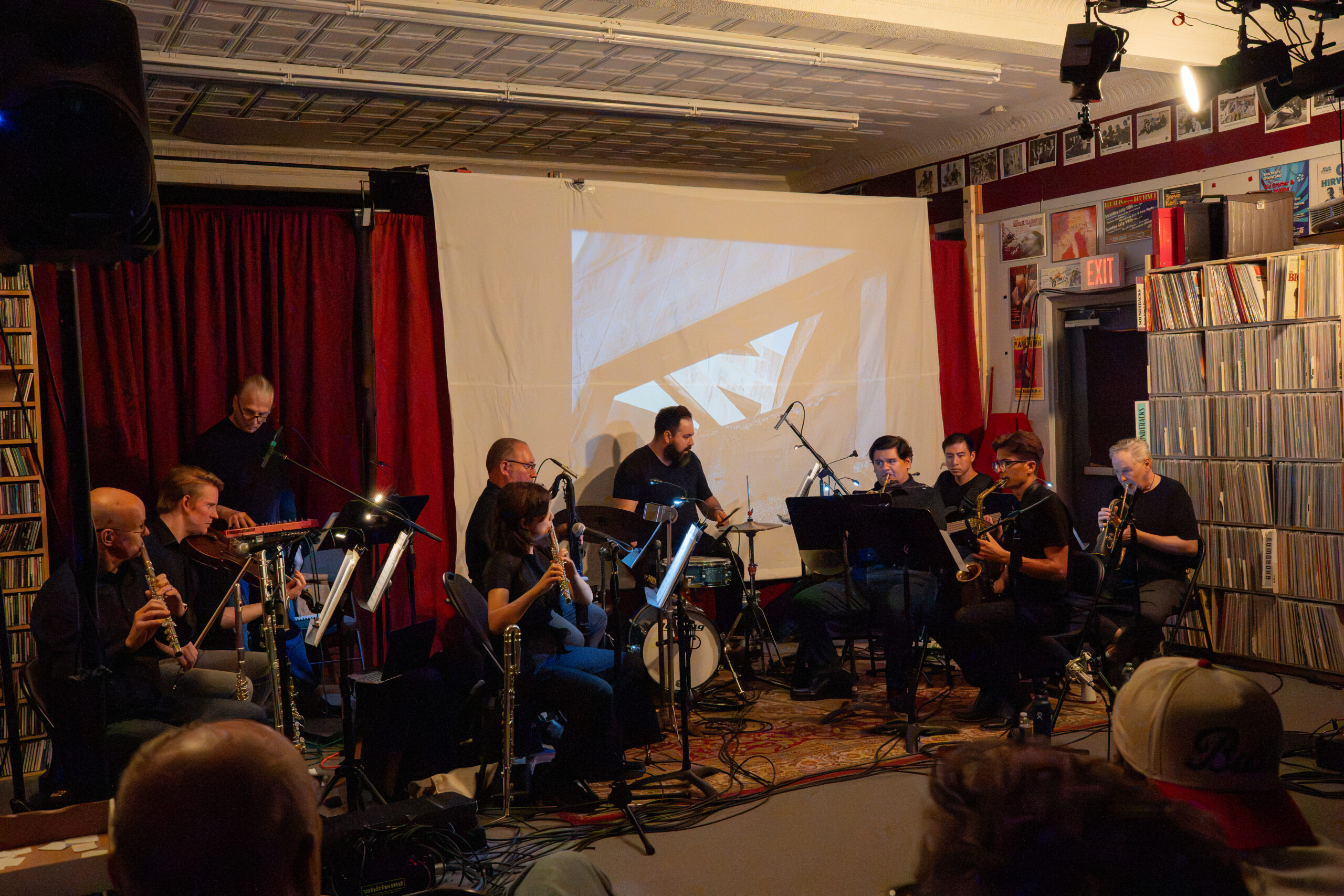
Rochester Overture caught two unconventional sonic collaborations at Sunday’s Rochester Fringe Festival, featuring local musicians. Here’s what we heard:
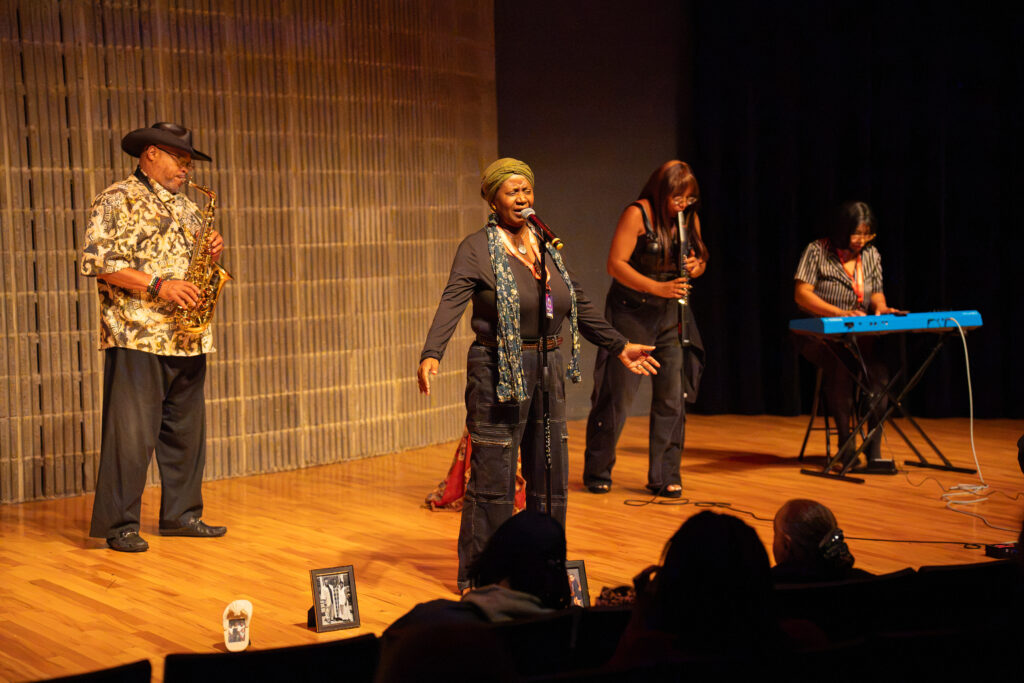
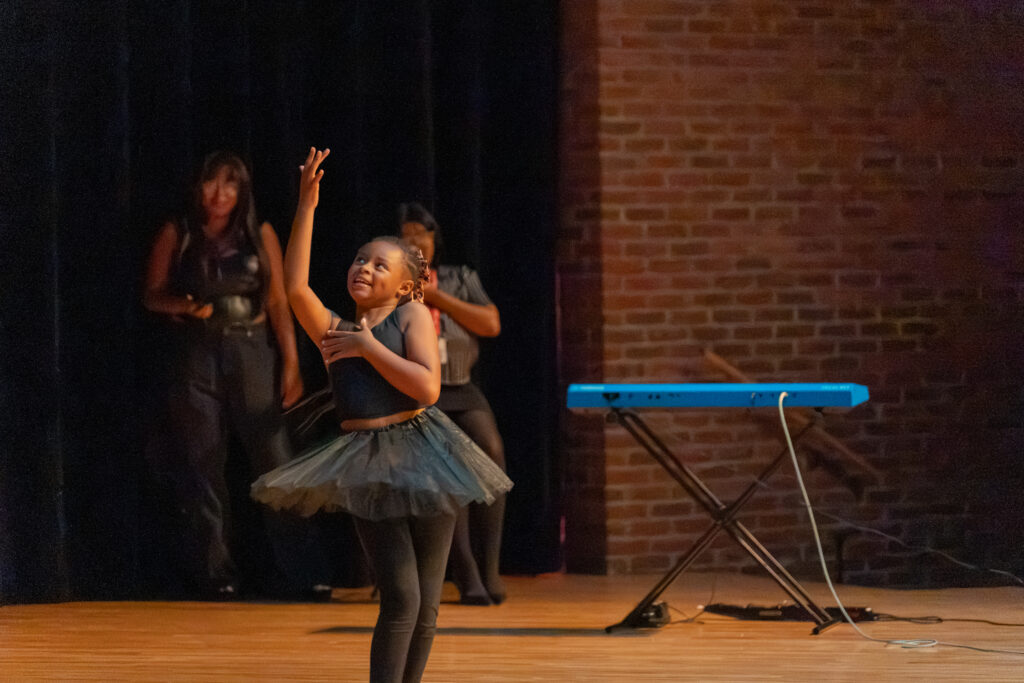
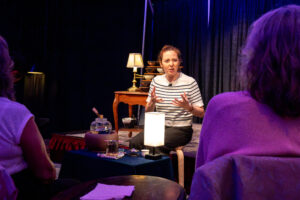
Smooth jazz sax player Jimmie Highsmith Jr. and his wife, the poet Lu Highsmith, joined forces on the School of the Arts stage for a night that married sound with words. Taking turns on Sunday afternoon, with Jimmy occasionally throwing in a background lick to accompany the poetry, they’re a complementary pair: Lu’s words rose and fell with the same rubric as the melodic patterns Jimmy plays, both building toward an emotional apex. Jimmie’s melodies climbed his instrument, eventually finding a high pitch to hang onto with impressive breath control. Lu’s words, too, found high points. In one poem that used a recurring phrase construction, she began with “Dance with me/Dance for me,” and moved and rose through actions that ended with the pinnacle phrase, “Love with me/Love for me.” The two were surrounded by framed photos that must’ve been there to honor family members; it was hard to hear because of electrical static from a wonky sound system that took over whenever the synth-backed track wasn’t playing. (Eventually they turned it off, but I still couldn’t catch much of what was said between performing.) But family seemed to be the thematic thread between musical choices and poetry topics. And the concert ended in a similar vein: The creative pair’s two daughters, Taryn and Ariana, joined on keys and an electric wind instrument (EWI), respectively. Even granddaughter Erin was showcased strutting through a choreographed dance.
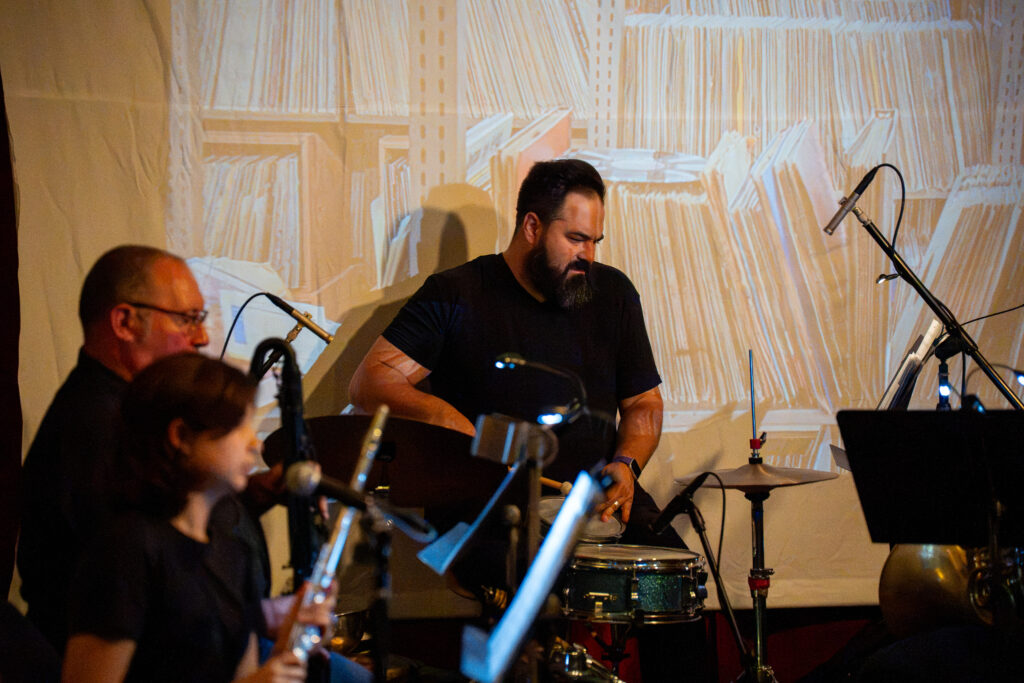
Description and reality diverged for Sound Signal at the Bop Shop on Sunday evening. The Fringe summary described the show as a “shared improvisational system shaped by color.” Projected color fields were supposed to shift slowly, with musicians responding in “real time, translating visual information into evolving texture, harmony, and gesture.” But that’s not what happened. The musicians played a set of short, improvisatory compositions—the sequence chosen by the audience by drawing numbers—to projected landscape and architectural photography taken by violist Benjamin Magruder. The photos, screened onto a white sheet hung on the back of the record store’s make-do stage, were nearly monotone and lacked demarcation, perhaps because the stage lighting stayed bright enough so that all 10 musicians could see the music they’d only first practiced together that day. Magruder mentioned that while the compositions would be played in a random order, the photography order was fixed, and that the musicians would let the photos influence how they played. But given that the music was still fresh for the group, I had a hard time thinking they paid much attention to the hard-to-see projected images. So, no, there were no color fields influencing musical decisions.
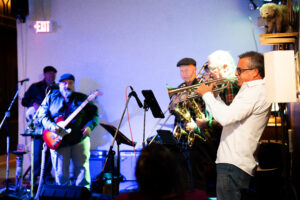
But don’t assume that because the concert format jived with the festival description that the sounds heard weren’t gripping. As the evening’s musical director and synth player Dave Rivello explained at the concert’s start, “Art without risk is not always the most engaging art.” And there was plenty of risk, from brand-new compositions to textures woven from an unconventional ensemble that included French horn, flutes, bass clarinet, viola, and synths alongside more usual jazz instruments. From chords that were more a sonic spectrum than static harmony, to phrases mumbled throughout the ensemble between instrumental solos and harder-hitting episodes, to pockets of horn-forward warmth, to bass-propelled post-rock beats, there was a lot of ear candy for receptive audience members. Especially fascinating were all the sounds emanating from drummer Aaron Staebell, who, on his litany of sound-makers, hit, shook, brushed, tapped, strung, and rummaged to create a complex panoply of rhythm. At one point, he threw a bunch of items, from claves to what might’ve been car keys, into a metal bowl and started mixing them around with rhythmic certainty. His sheer control over every little ting, jingle, or bang was absorbing.
So, no lights, no problem. It was a creative, satisfying night of music.
Edited to add: See additional photos from the evening by photographer Aaron Winters, who does a wonderful job capturing the jazz community.
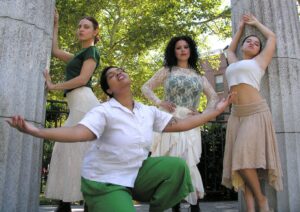
Featured photo by Anna Reguero.
Rochester Overture will be covering the Rochester Fringe Festival throughout its 12-day run, with reviews, photography, and more. Follow all of our Fringe coverage at rochesteroverture.com/fringe. Follow our socials on Facebook, Instagram, and X.
Arts journalism informs, documents, contextualizes, historicizes, questions, and amplifies the arts. Rochester has a rich arts legacy and an arts community producing significant creative work—and it deserves serious coverage that treats the arts as a major civic beat. Rochester Overture exists to fill a critical gap in Rochester’s arts ecosystem. Please consider supporting the publication.


Be First to Comment