Rochester has gone without an arts council—a common nonprofit advocacy organization among U.S. cities that centralizes support for the arts—since 2021. The longtime Arts & Cultural Council for Greater Rochester experienced financial difficulties during the 2010s that led to its dissolution.
Now, a plan could bring one back.
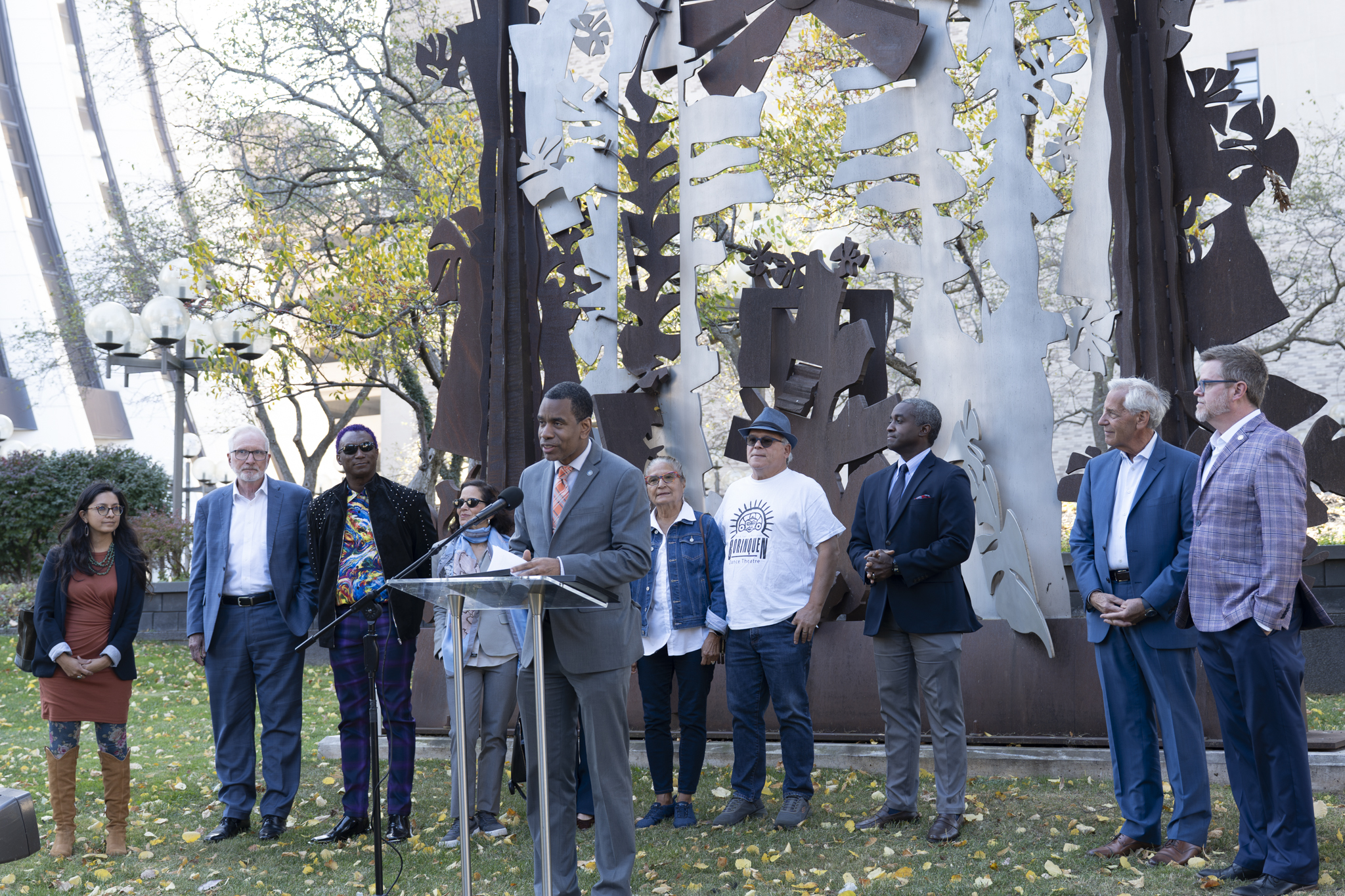
This week, the City of Rochester and Monroe County unveiled a 276-page plan to strengthen, invest in, and better coordinate community support for Rochester’s arts and culture. It creates new government infrastructure for arts support, provides widespread resources for artists, and establishes a local arts council to centralize support.
“This plan is a roadmap that will guide arts and culture investments, partnerships, and opportunities across our community over the next decade,” said Rochester Mayor Malik Evans at Thursday’s press conference.
The plan, created with a $200,000 budget funded by the City and County, with foundational support from RACF and the Farash Foundation, is currently in draft form and reflects feedback from the arts community and research on arts support programs nationwide.
The public can provide feedback on the draft through December 18. After that, the planning committee will aim to finalize the plan in early 2027. Several events throughout November and December will allow the public to learn more and provide feedback to the project team. (See end of article for a list of events.)
The arts and culture plan includes 6 guideposts, 8 priorities, 21 goals, and 66 action items, and provides a 10-year implementation roadmap. It also anticipates associated costs, which together could range from about $1.5 million to more than $3.2 million.
The plan addresses public arts infrastructure and increased support for arts organizations and individual artists, as well as public access to the arts, equity in the arts, and preservation. The plan serves area arts organizations, individual artists, and the general public.
Area arts organizations would benefit from new government arts infrastructure in the form of a city arts and culture commission and new government arts roles to better centralize support of the arts, as well as an expansion of the city’s Percent for the Arts program, which currently earmarks 1% of development costs for qualifying capital projects for public arts projects, proposed to increase to 1.5%. The city will also identify other funding sources, including revenue from a proposed increase in hotel taxes.
Central to the plan is establishing a new arts council, an advocacy organization that could, among other support, help funnel needed funding to arts organizations in the area.
“In any other city that is really successful in this world of arts and culture, they also have that third leg of the stool, if you will, for a nonprofit advocacy alliance type organization, like an arts council,” said Kevin Kelley, a manager in the City’s Office of Planning. “We’ve heard directly from artists that they are frustrated that there isn’t a centralized place to come and interact with each other and have an advocate and someone that can help them with shared resources.”
For individual artists, some of the most consequential plan actions are affordable housing and studio space, guaranteed basic income for artists from historically marginalized communities, and business and career support ranging from tax and legal services to entrepreneurial training. There are also proposals for arts fellowships and residencies.
The public will benefit from free access to cultural experiences, increased opportunities for arts education for schools and families, and community artmaking spaces. The plan also makes the arts more accessible for Deaf and hard-of-hearing and Spanish-speaking communities by supporting organizations in implementing accessibility and translation into their offerings. Communications about the arts will also get a boost, from facilitating an arts and culture calendar to supporting arts and culture reporting.
Kelley, a manager of city planning, says that the plan supports a whole arts ecosystem. “City government, organizations, individual artists––how can we all work more together to improve that part of our ecosystem?”
“One of the things that emerged throughout this planning process is that arts and culture are not an afterthought,” Mayor Evans emphasized. “They are essential to Rochester’s economic growth, urban renewal, community identity, and quality of life.”
The full arts and culture draft plan can be viewed here.
Along with the arts and culture plan, the city unveiled Art Around, three self-guided walking tours that focus on public art already visible across downtown Rochester. The tours range from 1.3 to 4.7 miles and include 12 to 34 art stops, with additional tours to be added.
Public Events and Feedback Opportunities
Draft Plan Release Party
Tuesday, November 17, 6–8 p.m.
Roc Arts Event Space, 215 Tremont St., Door 3, third floor
RSVP
Interactive Exhibition
November 18–30, 9 a.m.–9 p.m. daily
Village Gate, 274 N. Goodman St., second-floor atrium
Exhibition Opening Reception
Monday, November 19, 6:30–8:30 p.m.
Village Gate, second-floor atrium
RSVP
Virtual Plan Overview
Monday, November 23, 11 a.m.–noon
Zoom; advance registration required, recording to be posted afterward
RSVP
Interactive Exhibition
December 1–10: Monday–Thursday, 9 a.m.–7 p.m.; Friday–Saturday, 10 a.m.–5 p.m.
Rundel Memorial Library, 115 South Ave., first-floor Arts & Literature section
Exhibition Closing Reception
Wednesday, December 9, 4:30 p.m.–6:30 p.m.
Rundel Memorial Library, first-floor Arts & Literature section
RSVP
Public Feedback Deadline
Friday, December 18
In addition to public feedback forums, there is an online form for feedback at the project’s website.
Featured photo by Anna Reugero
Arts journalism informs, documents, contextualizes, historicizes, questions, and amplifies the arts. Rochester has a rich arts legacy and an arts community producing significant creative work—and it deserves serious coverage that treats the arts as a major civic beat. Rochester Overture exists to fill a critical gap in Rochester’s arts ecosystem. Please consider supporting the publication.


Be First to Comment