
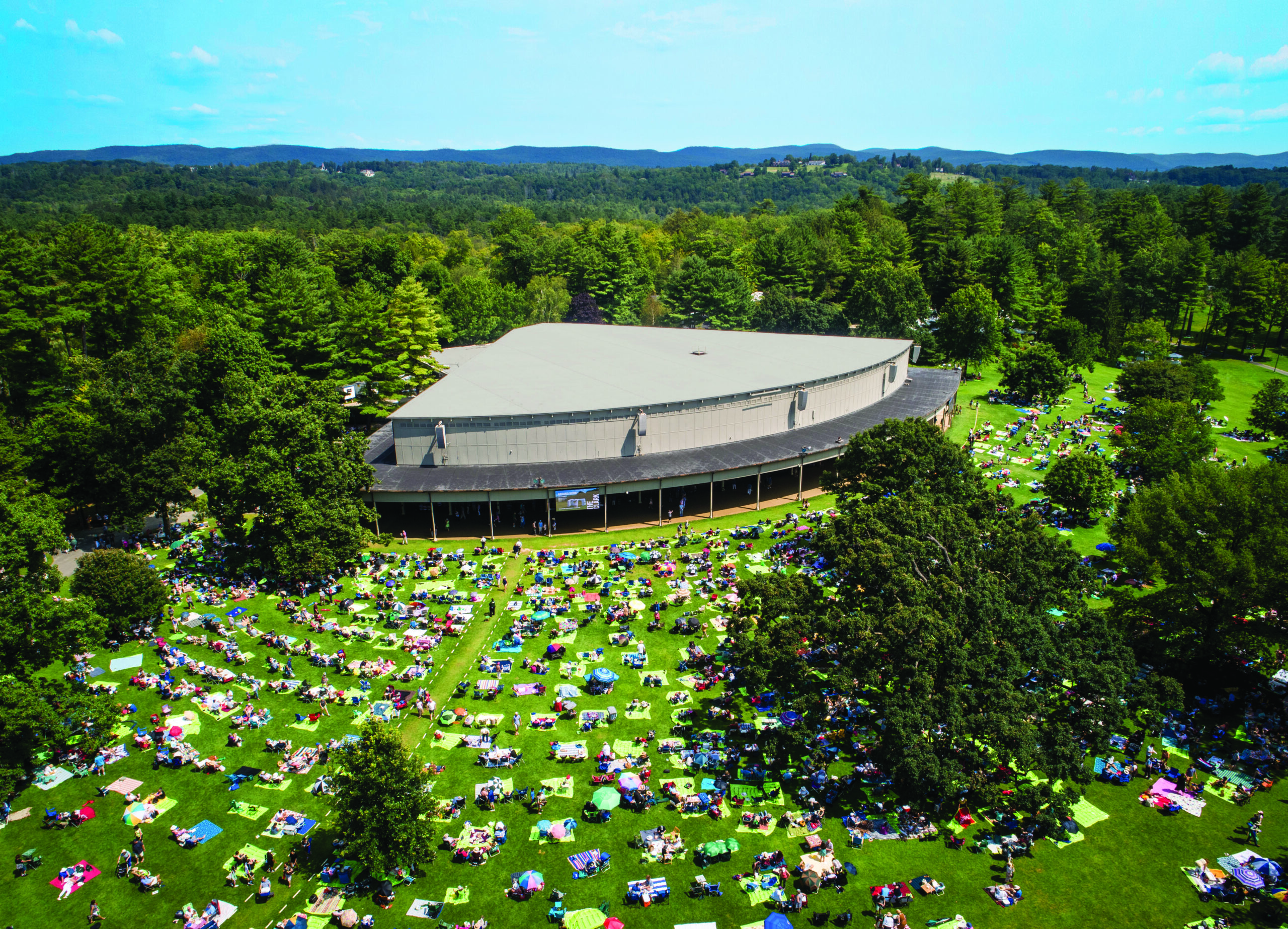
On the weekend of the 250th anniversary of our nation’s independence, the Boston Symphony Orchestra was not in its home city, a significant site of America’s resistance against British rule. It was, instead, beginning its 89th summer season at Tanglewood, a music festival and institution in Lenox, Massachusetts, where music is heard against the stunning backdrop of the Berkshire Mountains.
What began as a few summer concerts in Lenox in the 1930s has since expanded into an all-summer affair operated by the BSO. Tanglewood now presents approximately 170 performances, including weekly BSO performances with a cast of major guest artists, intimate chamber music concerts, a new music festival, a star-studded popular artist series, and concerts from its young-artist training program for rising collegiate musicians. It’s one of North America’s premier summer classical music festivals, often named in the company of the Aspen Music Festival and Bravo! Vail, both in Colorado, and the Ravinia Music Festival outside of Chicago.
“Not everyone can attend everything by any means,” says BSO Vice President of Artistic Planning Anthony Fogg, whose personal plan for attendance leaves him only two dark nights, “but we hope there’s enough variety to attract just about anyone at any level of musical understanding, familiarity, or passion.”
The location also shaves a couple of hours off what would be a Boston-bound road trip from Rochester to hear one of America’s ‘Big Five’ orchestras. From restaurants and spas to museums and even a yoga retreat across the street, Tanglewood’s Lenox location is a scenic summer haven in an otherwise rural area that attracts visitors from around the world—and is only a four-hour drive from Rochester.
Eastman School of Music alumni are often featured as guest artists—Erin Morley and Renée Fleming both performed early this summer season—and each year, Eastman students audition for and are invited to participate in the festival’s summer training program. And it’s all in a region that, through its many offerings, invites deep listening.
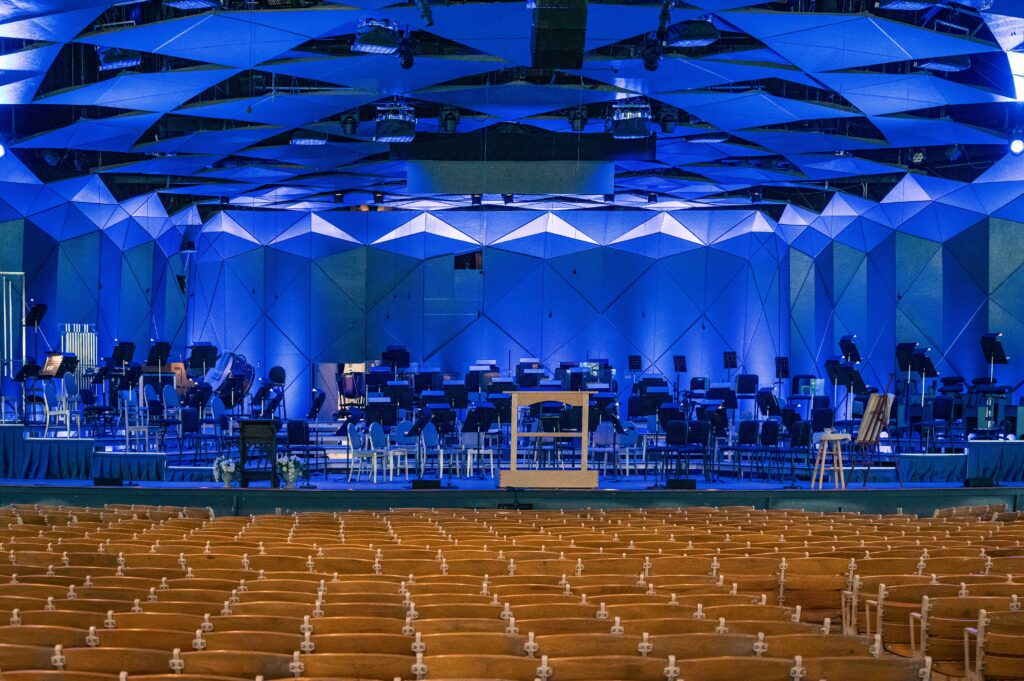
Tanglewood’s centerpiece is the Koussevitzky Music Shed, an amphitheater where audiences can enjoy the music under covered concert seating or by sprawling out on the lawn that extends behind the shed. Screens and speakers help broadcast the more subtle moments of concerts to the lawn. Inside the Koussevitzky Shed, the stage is surrounded by blue-hued prismatic panels that illuminate the performers and charge the mood. The panels project more than the orchestra’s soundwaves; chirps and warbles from feathered friends are amplified, too, adding a bonus sonic layer to any score performed.
But more than a major amphitheater, the grounds encompass an expansive 500 acre performing arts campus, which includes indoor performance halls such as the mid-sized Seiji Ozawa Hall (which can open up to additional lawn seating) and a more intimate Chamber Music Hall, a four-building complex that houses the Tanglewood Learning Institute, and several historic buildings used for administration and a music library—all contained by the large lake at the perimeter of the grounds and with Berkshire mountain tops on view in the distance.
Highlights of the 2026 Season
Tanglewood’s season is always an intricate patchwork of concerts, from classical fare—in orchestral concerts by both the BSO and the Tanglewood Music Center Orchestra (TMCO), chamber music and recitals by the biggest names in classical music, a new music festival for expanding ears, as well as other special programming—to popular acts, both in a special popular music series and through Boston Pops concerts. The popular music series brings in names like Brandi Carlie on August 18 and Carrie Underwood on August 29, while the Pops will feature names like Broadway stars Hugh Jackman on August 11 and Cynthia Erivo on August 21.
Concerts this summer follow in the BSO’s larger E Pluribus Unum: From Many, One theme, which has highlighted American music over two seasons leading up to America’s 250th birthday.
Soloists this summer include pianists such as Emanuel Ax (July 26, performing a world premiere concerto by John Williams) and violinists Joshua Bell (August 2), Renaud Capuçon (August 7, with cellist Yo-Yo Ma), and Ray Chen (August 16, with the TMCO conducted by Marin Aslop). Rising performers include the teenage phenom violinist Himari (July 26), who makes their Tanglewood debut. The Tanglewood Recital Series in the Seiji Ozawa Hall features a spectrum of performances, from the Danish String Quartet (July 30) and pianist Yuja Wang (August 19) to a multimedia performance using guitar-drone technology by contemporary composer and artist Laurie Anderson inspired by Amelia Earhart (August 13) and a special trance-filled, ritualistic performance by the Silkroad Ensemble with Rhiannon Giddens (August 20).
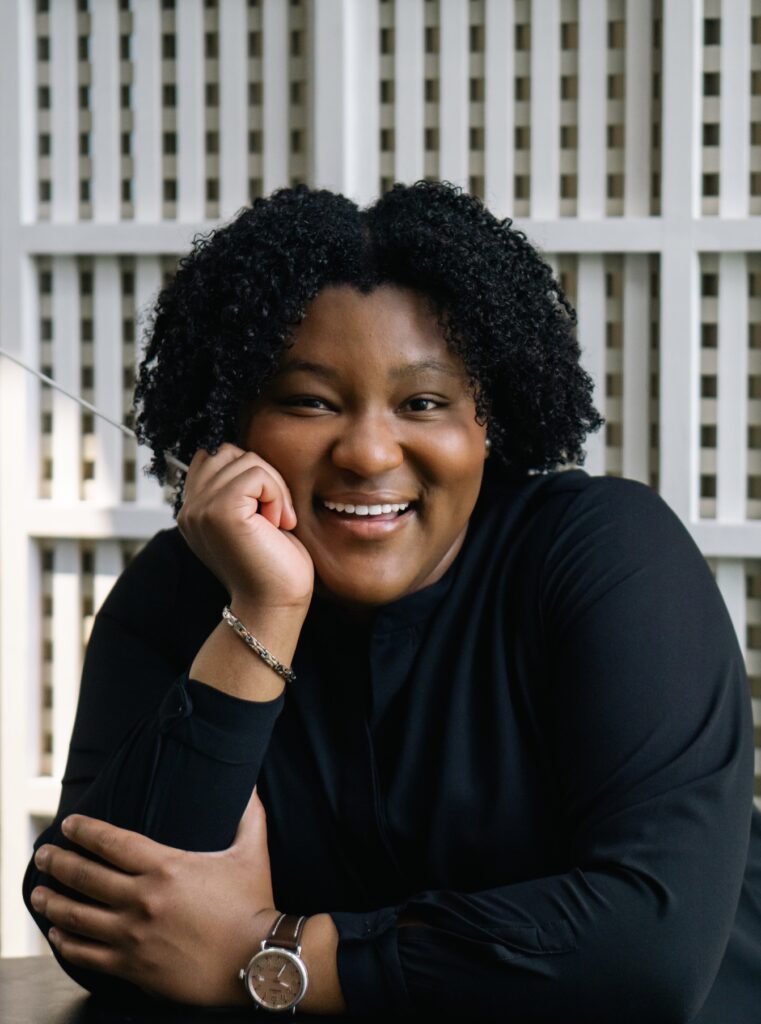
Fogg, the VP of Artist Planning, says that one of the highlights of each season, however, is the Tanglewood Music Center concerts led by conducting fellows who work closely with BSO Music Director Andris Nelsons. One of this year’s fellows is an Eastman School of Music alum: Conducting fellow Lauren Smith transitioned into conducting at Eastman under the tutelage of Brad Lubman while completing their master’s degree on the oboe and is now pursuing conducting at The Juilliard School. Of the several TMCO performances fellows conduct throughout the summer, the evening of American opera on August 10 with TMC vocal fellows stands out for its eclectic selections, including Aaron Copland’s The Tender Land, John Adams’s El Niño, John Harbison’s The Great Gatsby, Missy Mazzoli’s Proving Up, Stravinsky’s The Rake’s Progress, and Osvaldo Golijov’s Ainadamar (an opera that premiered at Tanglewood back in 2003).
Opera lovers will similarly be attracted to a concert version of Mozart’s The Marriage of Figaro (August 1), led by Nelsons and the BSO with a prestigious cast that includes the Metropolitan Opera leading soprano Susan Graham. It completes the BSO’s concert trilogy of Mozart operas with librettos by eighteenth-century poet and priest Lorenzo Da Ponte.
Los Angeles Philharmonic’s former music director Esa-Pekka Salonen, who is also a composer, curates this season’s five-concert Festival of Contemporary Music from July 23–27. In addition to conducting, Salonen’s compositions will be featured across the concerts, including in a concert of Nordic composers on July 27. (Salonen is from Finland.) Another concert on July 25, titled The Next Generation, pairs works by Gen Z composers with those by more established names. All Contemporary Music series concerts, which are performed by TMC fellows, are free.
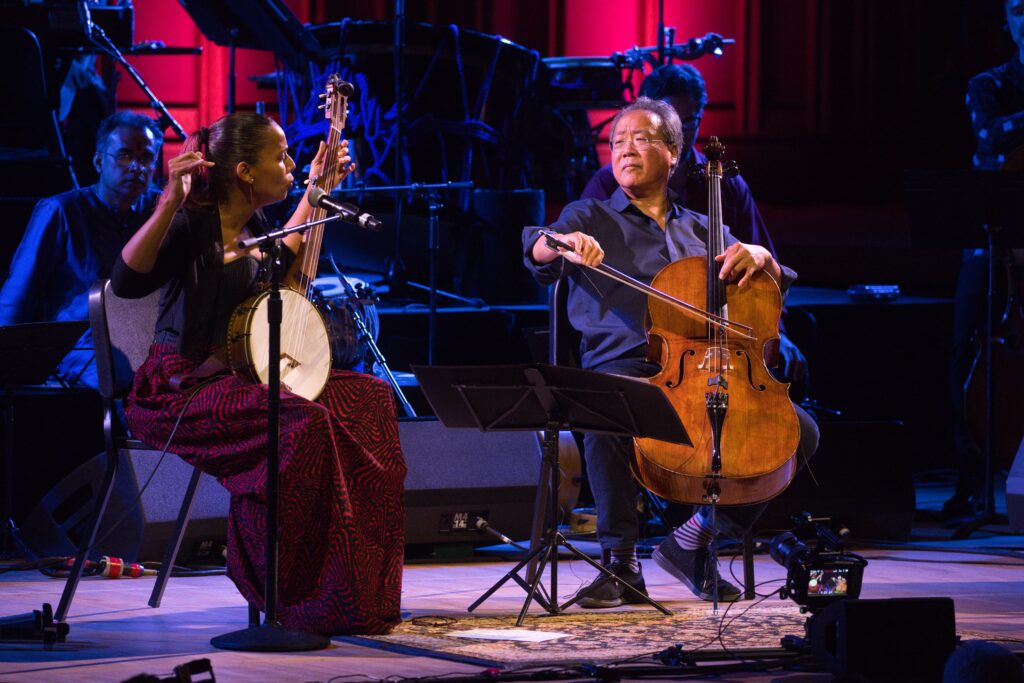
Another Tanglewood season highlight will be a week of curated concerts by cellist Yo-Yo Ma, from August 1–9, titled We the People: Our Shared Past, Present, and Future, which reflects on America as a multicultural experiment, a nation of immigrants with a shared purpose and geography. Several events center the Berkshire community and the region’s indigenous musicians. On August 8, Ma goes on an American journey with his high-profile friends, including the iconic singer-songwriter James Taylor, Grammy-winning folk singer Aoife O’Donovan, and the Emmy-nominated Native American vocalist Jennifer Kreisbert, all of whom will also be in conversation with historian Heather Cox Richardson and the Equal Justice Initiative Director Bryan Stevenson. Ma’s residency culminates on August 9 with a global performance, sharing the stage with Pakistani American singer Arooj Aftab, Iranian American composer and kamancheh player Kayhan Kalhor, cellist Karen Ouzounian of Lebanese and Armenian descent, and BSO cellist Christine Lee.
Edited to add: Tanglewood announced on Friday, July 17, that New Orleans-born pianist Jon Batiste will also join the August 8 concert, and that another concert featuring Native American composers will be added to Ma’s weeklong residency on August 5.
Further enrichment opportunities are available through the Tanglewood Learning Institute, which offers around 60 small classes on musical and artistic topics for audiences of all levels of musical understanding.
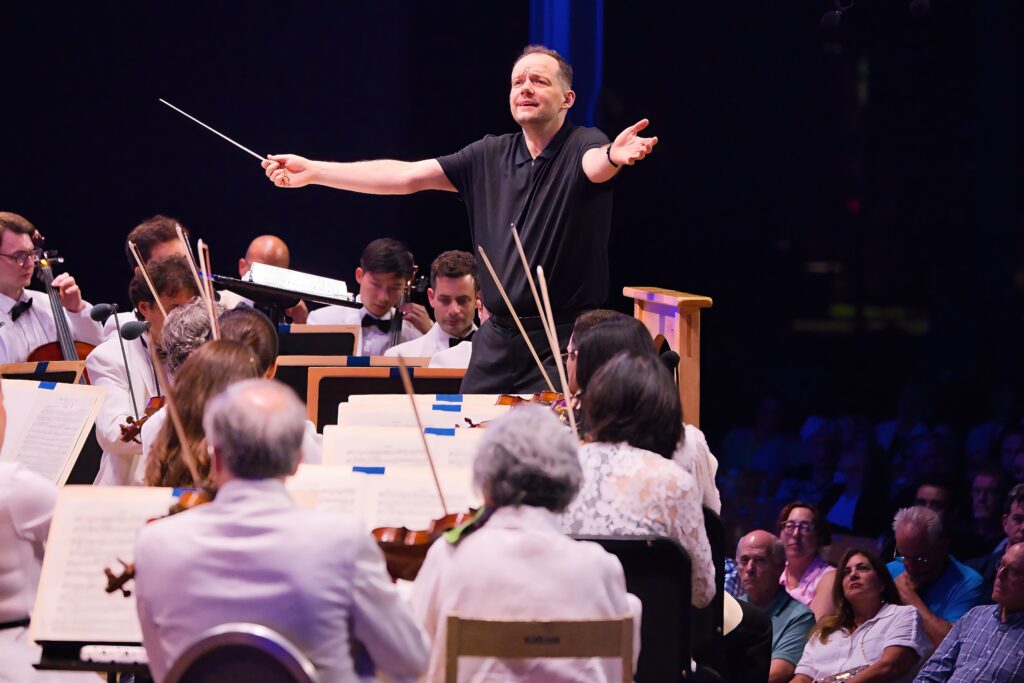
The darker side of this season, however, is the unceremonious termination of music director Nelsons’s contract. In March, the BSO board voted to end his contract at the end of the 2027 Tanglewood season, a move that was met with outrage from both musicians and the public. BSO President and CEO Chad Smith offered only perfunctory, vague explanations about misaligned visions. The board of directors cites declining attendance figures—down 23 percent since the pandemic and over 40 percent over the last twenty years—as well as overutilization of the organization’s endowment to cover financial windfalls.
BSO musicians, feeling blindsided by the decision, protested in Symphony Hall concerts this spring, wearing red flowers representing Nelson’s native Latvia and stomping and chanting Nelsons’s name at the end of concerts.
This level of discord adds to rising costs and economic uncertainties tied to the U.S.-Iran-Israel conflict, which has driven up gas prices and could affect attendance at Tanglewood this season. Fogg, the BSO’s VP of artistic planning, says that the two wildcards for Tanglewood are always gas prices and weather: “We are completely dependent on the weather gods.” Rain, heat, and wildfire smoke—all impact attendance for the festival’s many alfresco concerts.
To combat this, the festival keeps costs in check: lawn seats are affordable (and free for anyone 18 and under), outside food and beverages are allowed, and parking is free.
Sonic Excursions in the Berkshires
Part of Tanglewood’s attraction is its woodsy, mountainous setting, but it’s hardly the only place in the Berkshires where one is encouraged to turn one’s attention towards sound. An emphasis on deep listening to induce inward reflection is found across the region in art museums and yoga retreat centers.
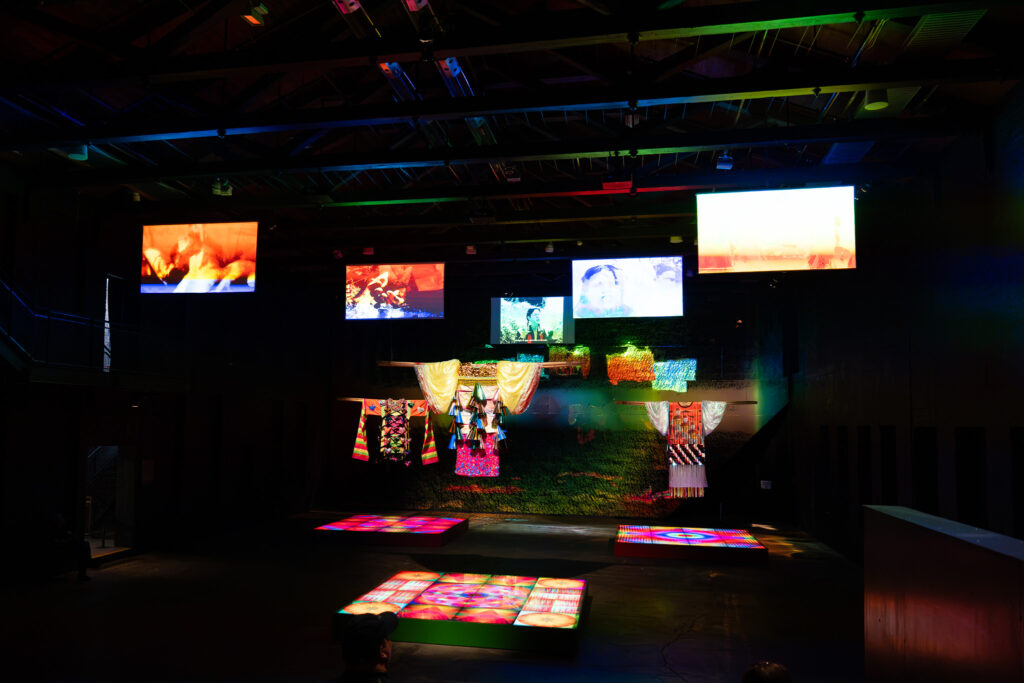
Only a 40-minute excursion on local roads from Tanglewood is MASS MoCA, shorthand for the Massachusetts Museum of Contemporary Art, a multi-building, reconstituted factory in North Adams featuring the largest collection of innovative art across artistic media in the United States. Several of the exhibitions incorporate sonic elements, whether at the forefront of the art or in the background. For instance, Jimena Sarno’s interdisciplinary work Rhapsody integrates sculptures and craft arts (weaving, pottery) with film, punctuated by the percussive and sometimes metallic sounds of craftwork, imagining a future in which collective production serves humanistic connection. Pulsating electro-techno sounds envelop listeners in Jeffrey Gibson’s Power Full Because We’re Different, which features oversized, hanging, kimono-like garments with spectacular colors and details that celebrate queerness and indigenousness in a massive, club-like space.
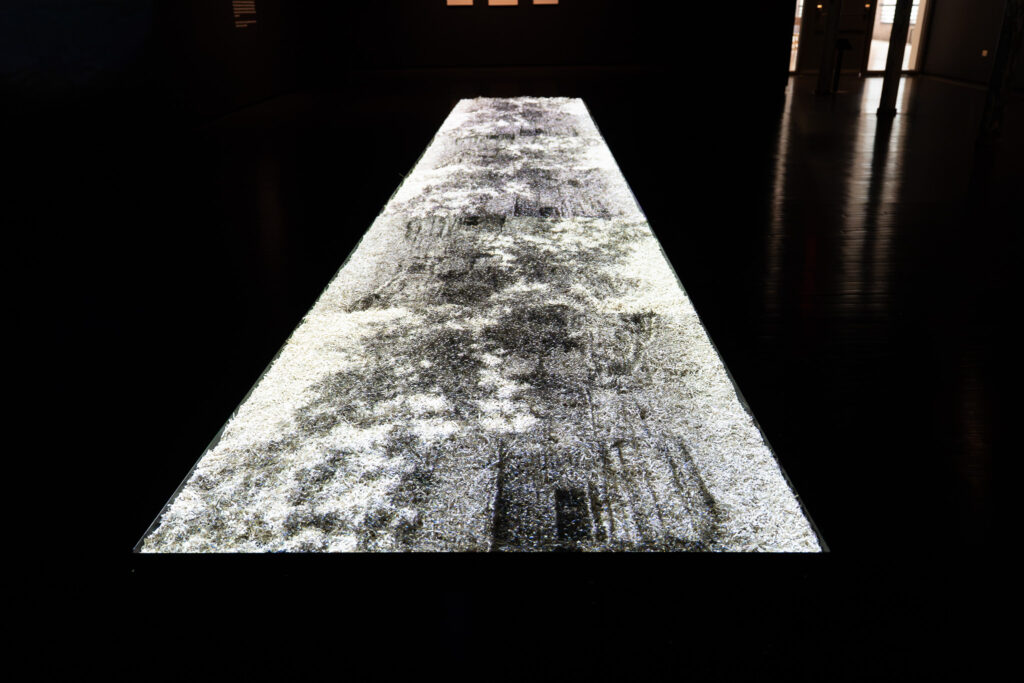
The museum also houses a long-term immersive exhibition by artist and composer Laurie Anderson—who is also featured at Tanglewood in August—that uses visuals, sound, and corporeal effects as storytelling devices. Anderson’s July exhibit included a work called “Sidewalk,” a floor exhibit with projections beamed onto shredded paper—copies of Fyodor Dostoevsky’s 1866 novel Crime and Punishment—that accompanied a traumatic story about how Anderson broke her back as a child, nearly losing her ability to walk.
Bang on the Can, a contemporary music organization based in New York City, has an annual performance festival at Mass MoCA. This year’s Bang on the Can Loud Weekend will take place between July 30 and August 1.
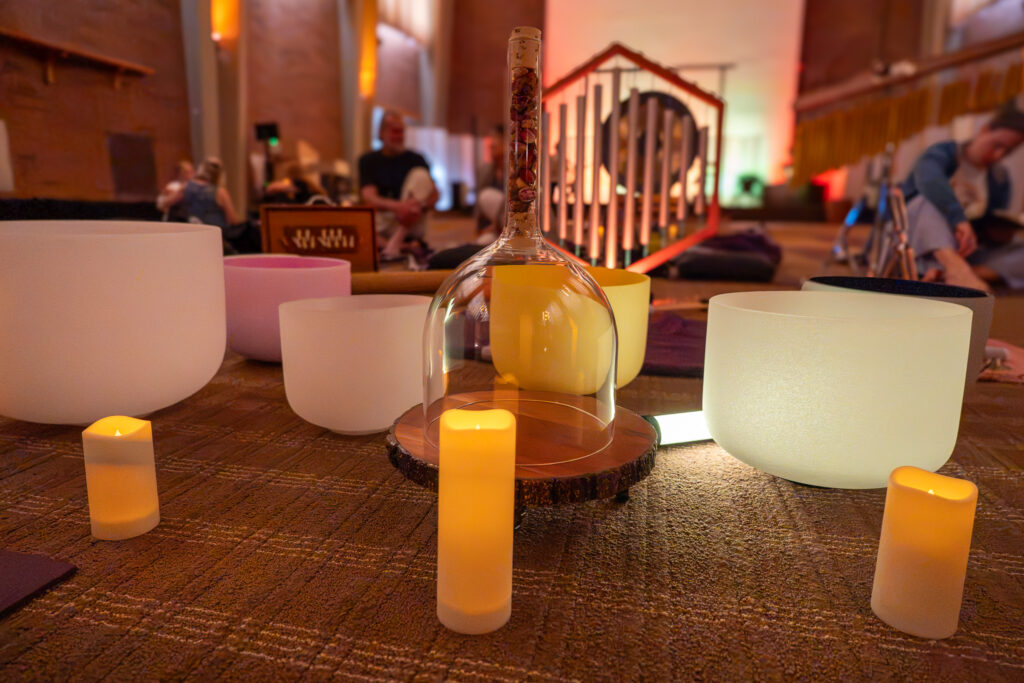
Sonic experiences are also integrated into the Kripalu Center for Yoga and Health, the largest yoga center in the United States, which sits on a 100-acre expanse of the Berkshire Mountains. During yoga classes, instructors sometimes use shruti boxes with manual bellows to produce a drone for an immersive class. During the center’s guided hikes, guides plan meditative stops to focus attention on the various buzzes and cracklings heard deep in the forest. But the most distinctive experience might be Kripalu’s evening sound journey with crystal bowls, where the felt vibrations from mallets gliding along the bowls’ edges help induce a deep state of relaxation.
The center is conveniently located across the street from Tanglewood, resulting in an easy daytime detour or, for some, a calming, all-inclusive overnight accommodation.
A Patriotic Opening Weekend
On Sunday, July 5, at the Koussevitzky Shed, Berkshire birds perched inside the amphitheater to fill in some of the quieter, pensive moments felt during the BSO’s opening Tanglewood residency concert. The program centered on the towering historical figure, Abraham Lincoln, the 16th president of the United States, who, in addition to his storied life and affecting words, is most remembered for abolishing slavery. Two of the works on the program used Lincoln’s humanistic texts about liberty and equality as source material—a new symphony from Philip Glass with a baritone soloist, and Aaron Copland’s Lincoln Portrait with actor Alec Baldwin narrating—while another work, a suite derived from John Williams’s score to the film Lincoln, simply depicted the former president’s life and legacy in sound.
On the anniversary of the nation’s founding and at a moment when our country’s democracy is being tested at the highest levels of American government, Lincoln’s words landed with gravitas. But the concert was more so political because of the events that led to the Glass premiere: Glass pulled the originally planned premiere from the Kennedy Center in Washington, D.C., back in January due to President Donald Trump’s bid for control over the institution and then approached the BSO about producing the work’s premiere.
“It was sort of a surprise and very wonderful opportunity that we had,” says artistic administrator Fogg, who added that there were several legal hurdles to clear before the BSO could get the rights to the first performance.
BSO officials found a place for the work in this patriotic Tanglewood concert and brought in the originally contracted conductor, Karen Kamensek, and baritone soloist, Zachary James, for the occasion. Both musicians have long associations with Glass’s music that made retaining them essential to the BSO. Kamensek has been conducting Glass works since the 1990s, including in her conducting debut at the Metropolitan Opera, and James previously originated the role of Abraham Lincoln in Glass’s 2013 opera about Walt Disney, The Perfect American, and has performed in several revivals of Glass operas in major opera houses. (James also has Rochester associations, as a 2009 winner of the Lotte Lenya Competition, which is held each year in Eastman’s Kilbourn Hall.)
“It’s always good to have a new work in the hands of artists who are familiar both with the language and the composers’ working preference,” Fogg expressed. Glass was present for a rehearsal and for the concert.
For some, Glass’s cascading arpeggios induce a meditative state that places listeners inside static chords before shifting their foundation through changes in mode or slight alterations in rhythm. For others, Glass relies on easy striated triads, repeating with little variation. But over time, Glass, who is 89 years old, has moved away from the strict aesthetic stance that helped define the minimalist movement of the 1970s and has developed a deeper emotional core with increased melodic interest, which has helped him remain a significant musical figure into the twenty-first century.
For his Symphony No. 15, which was an eight-movement vignette of Lincoln’s speeches and writing that range from the biographical, detailing Lincoln’s early life, to the end of the Civil War, Glass curiously pulled back on both the aesthetics and emotion. Glass allowed the text to do most of the work, performed compellingly and with a potent dignity by baritone vocalist James. The words were supertitled for audiences, but between the understated score and James’s precise diction, it wasn’t required for comprehension. For all the nuance James brought to his performance, and with the orchestra confidently led by Kamensek, the underlying music did little to emphasize the text. The music existed as a tastefully decorative yet mostly inert platter for the words, the music only occasionally rising and releasing in Glass’s usual tides. The words shouldered all that was distinctive.
This disconnect between words and music lingered, especially after hearing the works following intermission: Williams’s score from Lincoln and Copland’s Lincoln Portrait. Both Copland and Williams are architects of atmosphere and consummate sonic storytellers. With or without Lincoln’s words, their music does as much to communicate the gravity, and even sometimes levity or banality, of ideas and phrases. Copland attracted dance choreographers by writing music evocative of America’s mountains and plains; Williams writes such vivid music for films that some are more memorable for their musical themes than their plot. Both, too, have legacies that are intertwined with the BSO: Copland’s music was championed by famed former BSO music director Sergei Koussevitzky, while Williams was the long-time conductor of the Boston Pops and currently holds the title of conductor emeritus.
Williams is a stylistic chameleon, a useful skill for writing music evocative of broad time periods, characters, and figures. Because of this, his Lincoln score relies heavily on the wide intervalic leaps, arpeggiated phrases, and Americana folk materials that are not only sonic markers of America as a promised land but are also Copland’s sonic footprint. The work, however, gave several members of the BSO a chance to shine in solos, including violinist Alexander Velinzon in a fiddling hoedown and an introspective ruminating solo by trumpeter Thomas Rolfs, who stood to perform in the final movement.
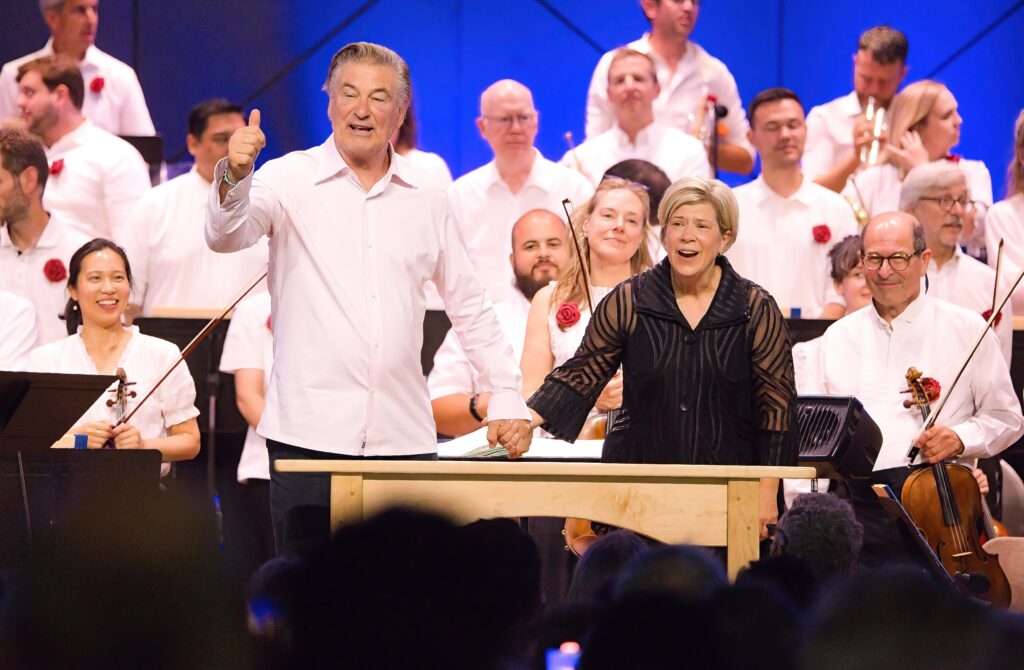
The final work, Copland’s Lincoln Portrait, was given what Fogg called a “celebrity notch up to the afternoon,” with actor Alec Baldwin narrating words that not only animated Lincoln’s personality but gave the requisite weightiness to Lincoln’s words on liberty and justice.
On the nation’s 250th anniversary, Lincoln’s words offered a reminder of the ideals upon which the country was founded, while the concert itself served as a reminder that world premieres and world-class artists are just four hours from Rochester.
For the full schedule of concerts and events and to buy tickets, click here.
For a season brochure, click here.
—
Featured photo: Aram Boghosian


Be First to Comment