
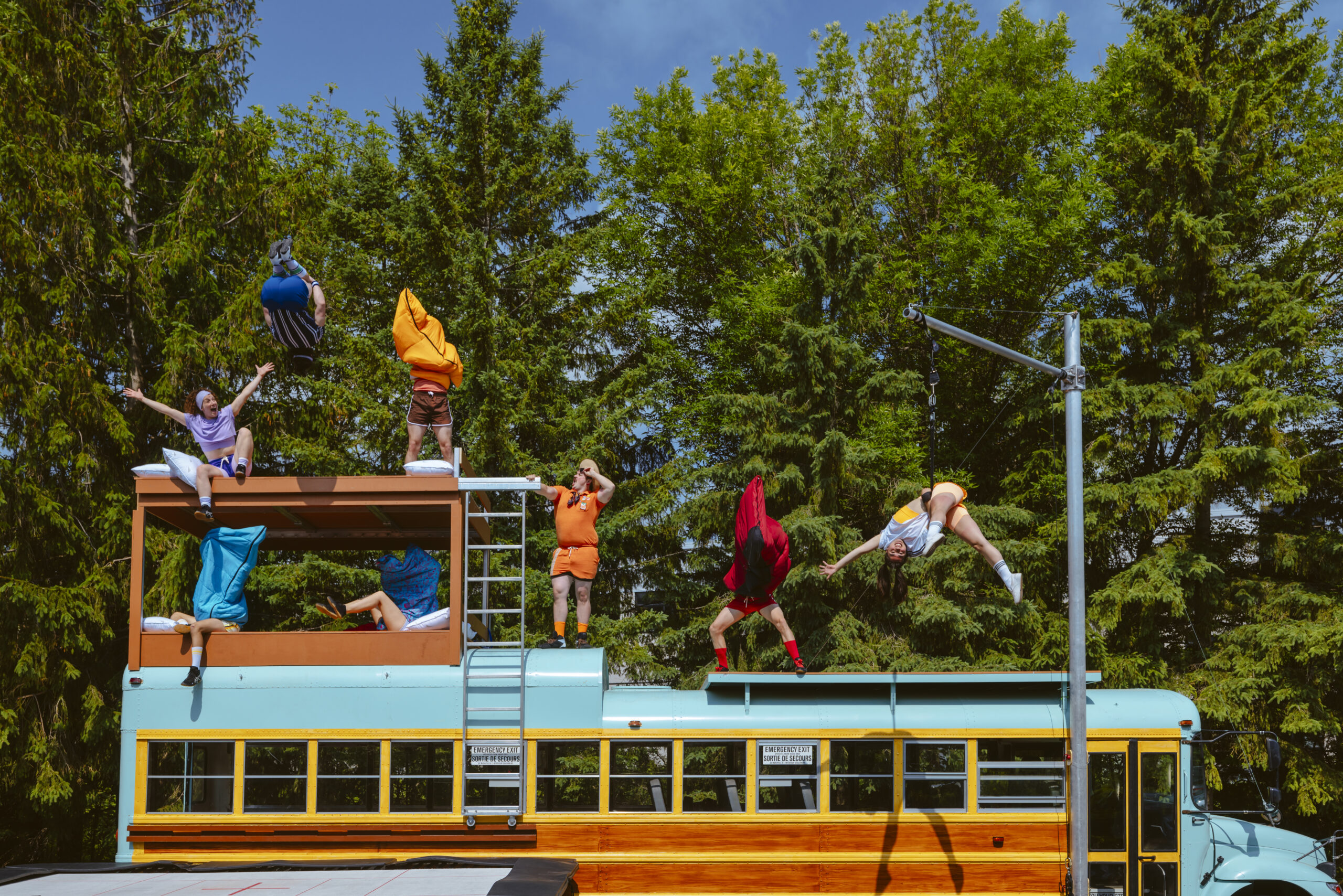
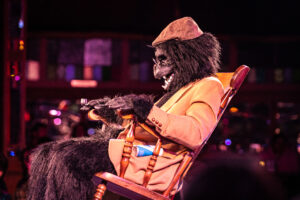
At this year’s ESL Rochester Fringe Festival—starting on Tuesday this week and running through Saturday, September 26—audiences can climb into a trailer for campy improv comedy, experience sensory extremes in an immersive outdoor sauna performance, or be entranced as a young man dressed as a gorilla dressed as an old man sits in a rocking chair for exactly 56 minutes.
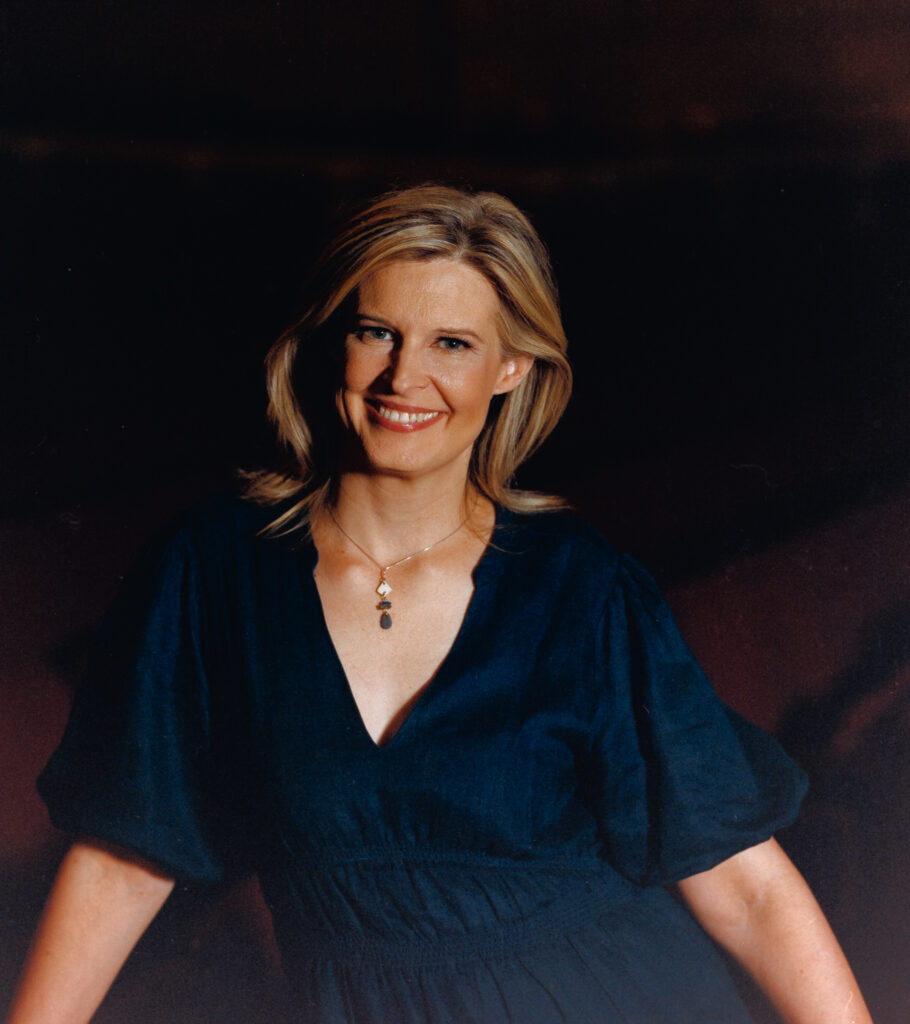
But CEO, President, and Founding Festival Producer Erica Fee insists that the “fringe” in Fringe Festival doesn’t mean “fringes of society.”
“It doesn’t mean some sort of fanaticism,” she insists. “It just typically means a multidisciplinary performing arts festival, typically focused on new work.”
The Fringe Festival concept began in 1947 when a group of uninvited artists showed up to the Edinburgh International Festival, an invitation-only event, and performed. Scottish journalist Robert Kempt called it a “fringe festival,” meaning shows on the outside of the main festival. The Edinburgh Fringe, which just wrapped up its 79th year at the end of August after presenting over 4,000 shows, is now the largest performing arts festival in the world.
Yet over the last 14 years, the Rochester Fringe Festival has presented a cross-section of shows that are wild, weird, and experimental. That continues this year, the festival’s 15th. Case in point: a show that has audiences slide into the back of cars for intimate mini dramas by actors portraying characters like Dolly Parton and Sonny & Cher has sold out for its 12th year.
And Rochester’s Fringe does it at every scale, from shows for a pair of audience members in the back of a car to tens of thousands of people gathering at Parcel 5 to see aerialists and acrobats climb around and dangle off a rising 3,400-cubic-meter hot-air balloon lifting a grand piano. The festival has grown from a five-day festival (initially four before interest forced an extra day) to one that will, this year, present 715 performances in 45 venues over 12 days.
At the center of the festival is One Fringe Place, a transient festival hub at Main and Gibbs streets, in the lot space across from the Eastman School of Music’s Student Living Center, where performances take place in three different settings: the Spiegeltent, the smaller Garden Studio, and the outdoor Dawn’s Spiegelgarden.
The Spiegeltent is the festival’s jewel box venue. Constructed out of wood, it has a rotund, ornate interior lined with mirrors and stained glass that imbue performances with a sense of spectacle. It’s Rochester’s Moulin Rouge. In the past, Rochester Fringe has rented its Spiegeltent. But its glass features aren’t particularly durable. One year, the tent was smashed in transit. So, the festival launched a $1.575 million capital campaign to buy one. The festival debuts its owned Spiegeltent this year.
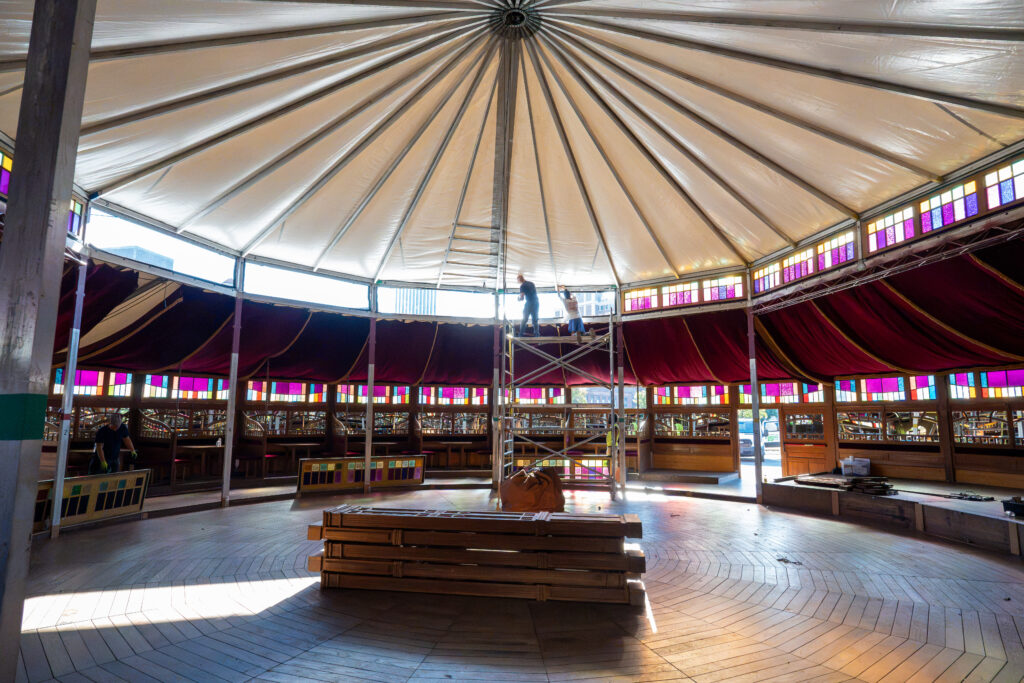
The campaign is still ongoing, at 85 percent funded. But the tent will add another income stream for the non-profit festival with a $1.9 million budget: As the first North American fringe festival to own a Spiegeltent, it can rent it to other festivals and presenters.
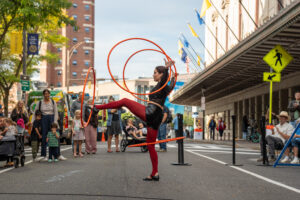
Another feature of the Rochester Fringe Festival is its free, outdoor shows in public spaces, which Fee says sets Rochester’s festival apart. This year’s free shows center on the circus arts, what the festival is calling Circus in the City, on Friday and Saturday, September 18 and 19, free to the public on both Gibbs Street and at Parcel 5.
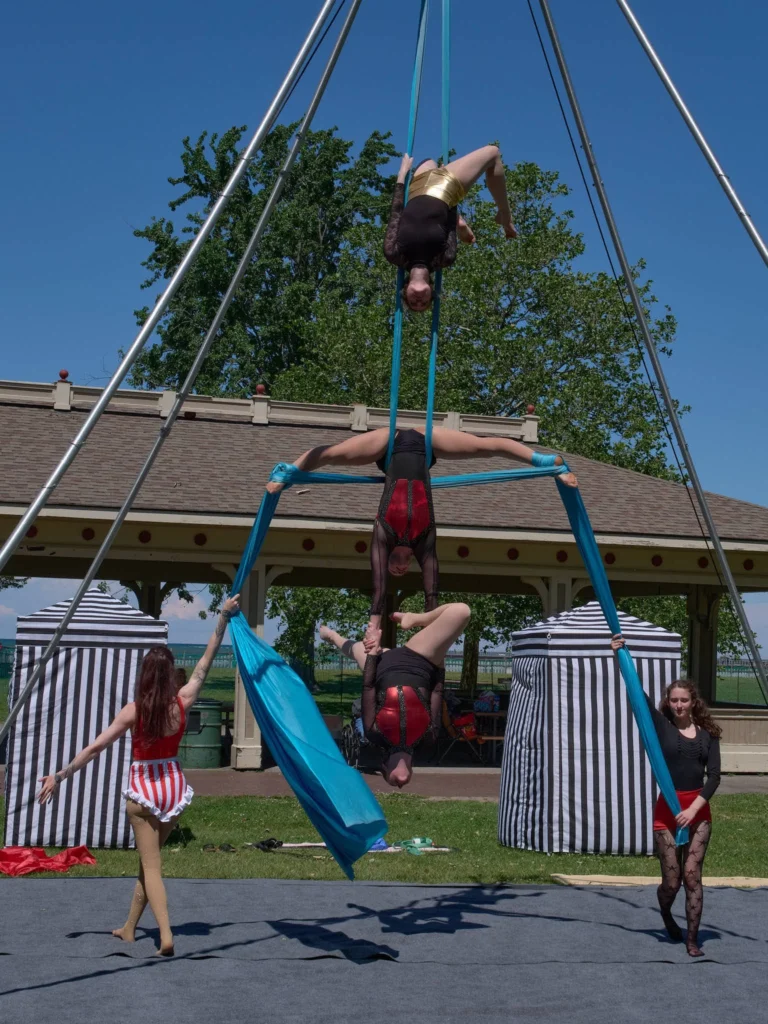
Included in the lineup is Quebec City’s Flip Fabrique, Chicago’s Aloft troupe, New York’s 3AM Circus, Vermont’s Big Teeth Collective, and North Carolina’s Circus Evo. There will additionally be juggling and breakdancing. Rochester’s own circus arts company, Roc City Circus, will also be featured.
“There are so many different acts, and it’s great that they are focusing on circus, and that people can come and you can see these acts for free,” says Mandy Raville of Roc City Circus. “Normally, you’d be paying for them, so it’s great that the festival has sponsored that and brought that in.”
In its fifth year in Rochester’s Fringe, Roc City Circus will also put on an original show at its University Ave. studio called At the Masquerade Ball, running Friday through Sunday of the festival’s first weekend.
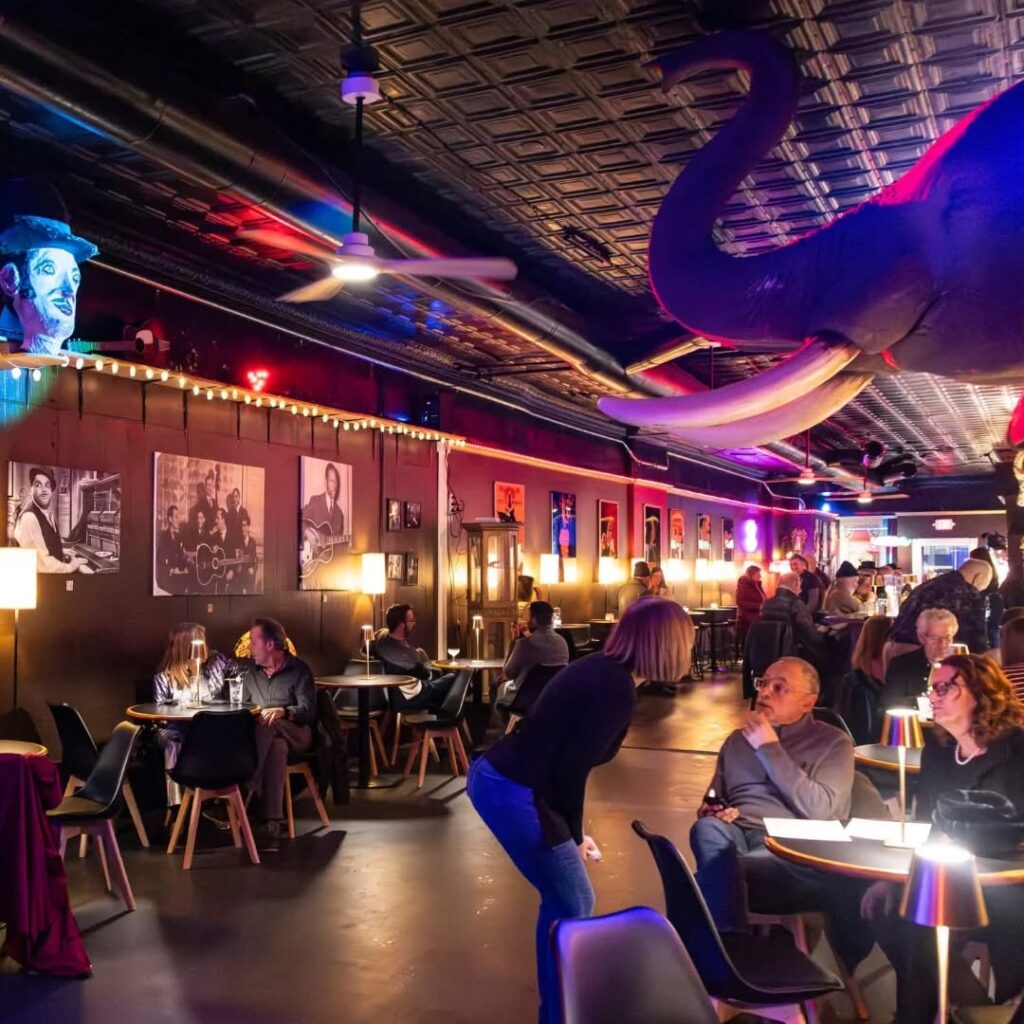
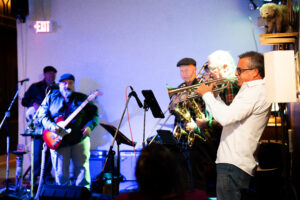
Venues this year include the Rochester School of the Arts (SOTA), a longtime Fringe Fest partner and one of its largest programmers, which will feature 45 shows, some with multiple showings, across six performing spaces. New this year is St. Paul’s Episcopal Church, across from the George Eastman Museum, which will feature a variety of musical performances. Also new is the Biltmore Bar & Lounge, a cocktail and live-music venue that opened on State Street earlier this year, with 21 shows over the festival’s 12 days.
“Rochester has a reputation for creating niches and subcultures of idiosyncrasies and raw talent,” said Biltmore co-owner Jacob Rakovan in a press release. “So, that’s how we program our Fringe lineup—if it’s different and authentic, you’ll feel at home here.”
Sometimes the venue is the show, as in Delmonico & Dugdale Strings, where audiences will watch performers through the store’s glass windows from the street. Even Rochester’s most formal venue is a presenter: Kodak Hall at Eastman Theatre. The Rochester Philharmonic Orchestra performs a show there featuring the sci-fi sounds of the theremin on Saturday, September 19, and festival headliner, comedian Pete Davidson, entertains on Friday, September 25.
The festival operates as a bifurcated model: some shows are curated by the festival producers, while many are chosen directly by the independent venues that participate. This model, known in Fringe circles as the “Rochester model,” differs from the so-called Canadian model, which uses a lottery system that leaves much of the offerings to chance, and the Edinburgh model, which removes a festival jury and leaves choices entirely to the venues. Rochester is the middle ground, where curation and decentralization meet.
While there’s no requirement for shows to be “fringy,” Fee says that the most successful shows tend to do something different. “You’ve got to do something to set yourself apart from 715 performances, and it’s often those mashups, those collaborations when you have projection and dance and improvised music … the venues find is that it has to be something different from what they’re programming the rest of the year in order for it to be a hit.”
And not everything will be, well, good. The festival admits quality can vary, but that not knowing is part of the delight. The festival not only presents emerging artists, but also professionals trying out new work. Sometimes new work lands; sometimes not.
Aside from festival-curated shows, some of which have already amassed hype at other festivals or come to Rochester directly after their run at Edinburgh (as is Judy Garland is Fat at Carnegie Hall), the venues run their own selection process. “Somebody believes in putting these shows on the stage,” says Fee.
Fee, however, believes that Rochester is a wonderful place for artists to try out new work. “Rochester audiences are actually hungry for new work,” she says. “We have this reputation that we’re very conservative. I have not found that in 15 years at all. I have found that Rochester audiences tend to be very interested, attentive, and responsive.”
The challenge this year, however, is rising costs and economic uncertainties that may put a damper on tourism. The festival typically draws a crowd from nearby Canada but expects lower attendance from our over-the-border neighbors. Additionally, rising costs have outpaced inflation, straining a festival that already heavily subsidizes tickets to keep costs down for attendees. Fee hopes donors will keep stepping up to bridge the funding gap.
For undeterred audiences, however, the sheer number of offerings can be overwhelming. But Fee responds that “chaos is the point.” She hopes people come for what they know, then stay and try something new. To find shows, Fringe’s website and app allow audiences to filter by date, genre, venue, age (plus kid-friendly shows and a whole kid’s day), free shows, and even accessibility.
There’s no accounting for individual preference or taste, but with 715 shows, there’s a lot to sift through. Here are some shows that caught Rochester Overture’s attention:
Quintessential Fringe Fest:
Cirque du Fringe: Anchors Away: This world premiere Spiegeltent show anchors the festival by mashing up a murder mystery with circus acrobats, featuring performers from Cirque du Soleil, America’s Got Talent, and Las Vegas’s Absinthe. Imagined by Matt and Heidi Morgan, the show was created specifically for Rochester’s Fringe.
Tea Party at the End of the World: Erica Fee, Rochester Fringe Fest’s founder, saw this one at the Wild Festival in San Diego. She went in blind. By the end? “Everyone was in tears, but in the best possible, magical way. It was remarkable.” The show—a real-deal tea party—somehow connects the Arctic Circle with an existential exploration of life and death.
Just to Be Close to You: What happens when a professional clown plays a washed-up lounge singer called Carl Poteraychke? Something hysterical, Fee told Rochester Overture. If you’re looking for an interactive show, where the audience is as much a part of the show as the performer, this is another one to check out. It comes directly from Edinburgh Fringe.
For Dance Lovers:
There’s plenty of moving and grooving over the festival’s 12 days, some of which you can partake in, like swing and contra dancing. But if you want to gawk over the insanely cool skills of street dancers, don’t miss Fringe Street Beat, which has been featured at the festival since 2016. This competition, held free at the bowl at Martin Luther King Jr. Park at Manhattan Square, draws dance crews from across the region and Canada. The finals, at 3:30 p.m. on the festival’s final Saturday, will be on fire. For more improvisatory hip-hop and contemporary styles, check out the local TETRA Dance Company’s show Throughlines or the visiting Los Angeles troupe Versa Style Street Dance Company. Celebrate original, contemporary dance in Rochester with BIODANCE’s 20th anniversary performances, which will include media created by Rochester Institute of Technology professor W. Michelle Harris. And if you like a little fantasy, fun, and rhyme in your dance, the Rochester City Ballet brings Dr. Seuss to life in performances at SOTA.
For Adventurous Ears:
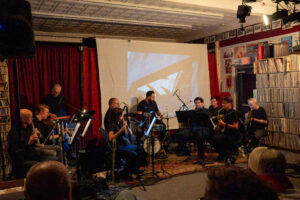
The Miles Davis centennial has been a major theme this summer, but there’s another multidisciplinary chance to dive into the famed trumpeter’s catalog with Miles Davis Animated, a show that combines the music of Miles Davis with detailed comic drawings of Davis’s life by musician and artist Dave Chisholm, an Eastman School of Music trumpet player who published the fascinating graphic novel, Miles Davis and the Search for Sound. (Read an interview with Chisholm here.) Joining Chisholm’s jazz quintet will be two tap dancers. In another show that combines jazz with another medium, Sound Signal engages some of our area’s top jazz musicians—such as woodwind player Charles Pillow and keyboard player Dave Rivello—to respond to shifts of projected color fields through texture, harmony, and gesture at the Bop Shop. The Rochester Philharmonic Orchestra features German theremin player Carolina Eyck, whose control of her instrument’s electromagnetic fields almost seems like witchcraft, in a widely praised intergalactic concerto by French composer Régis Campo, but the highlight for me is John Adams’s transgressively tuneful Grand Pianola Music, with two grant pianos offset ever so slightly to sound machinic. Musicians and nature are collaborators in Forest Music, a musical walking tour of Washington Grove.
For Laughs:
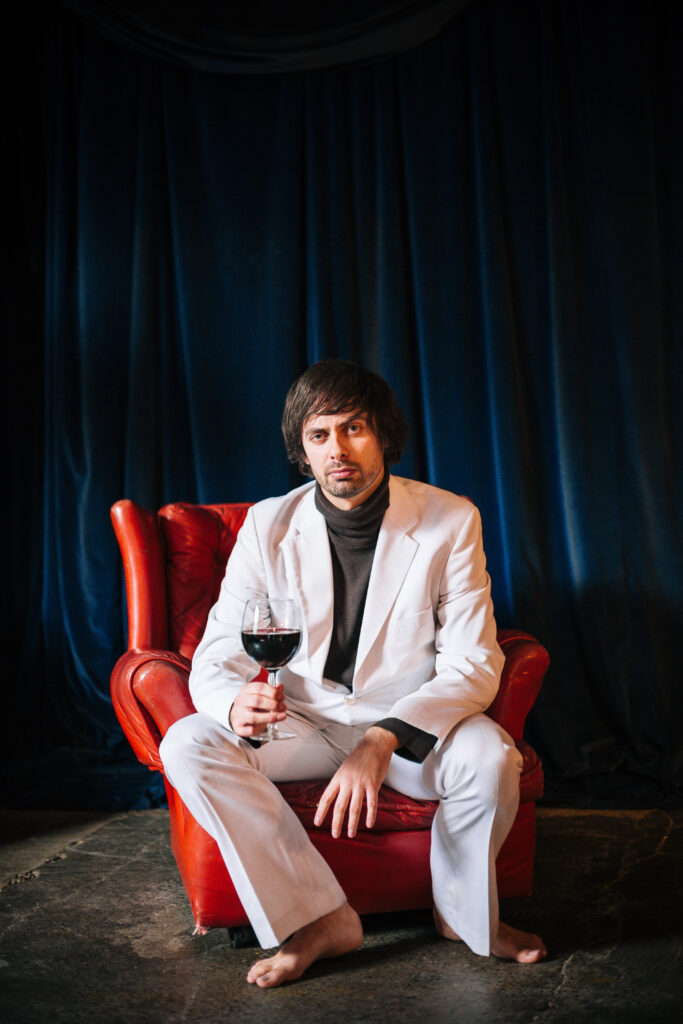
Your woes and gripes are comedy gold for French comedian Marcel Lucont, who builds an entire show around his ability to turn your worst moments into witty, deadpan repartee. Don’t be scared: this interactive show has the time-tested goods, a World Fringe Best Comedy winner. Comics with major resumes, including from Chicago’s Second City improv troupe, are featured in shows like Misery Loves Company, an improvised horror comedy reimagining Steven King’s Misery; Broadguess, where comic Dee Ryan investigates William Shakespeare for murder; and Thank You Kiss’s Please Excusememe, a sketch comedy show built on absurdities and social commentary. Rochester’s Madelein Murphy returns to Fringe after her debut special, Muddin, launched on Prime Video earlier this month. She performed the show, Lesbian American Princess, at Fringe in 2024 while developing material for her recorded special; now she’s back with even more material.
For the Littles:
There’s plenty for kids throughout Rochester’s Fringe Festival, including a whole day devoted to children on the festival’s final Saturday. But terrible children can unite—and even win—in Marcel Lucont’s Les Enfants Terribles – A Gameshow For Awful Children. It was named a top 10 kids’ show at Edinburgh Fringe.
Top featured photo: Stephane Bourgeois
Rochester Overture will be covering the Rochester Fringe Festival throughout its 12-day run, with reviews, photography, and more. Follow all of our Fringe coverage at rochesteroverture.com/fringe.
Sign up for our newsletter to get Rochester Overture coverage right to your inbox.


[…] 12-day Rochester Fringe Festival begins today, with the first 27 of 715 performances. Rochester Overture begins reporting on shows […]