
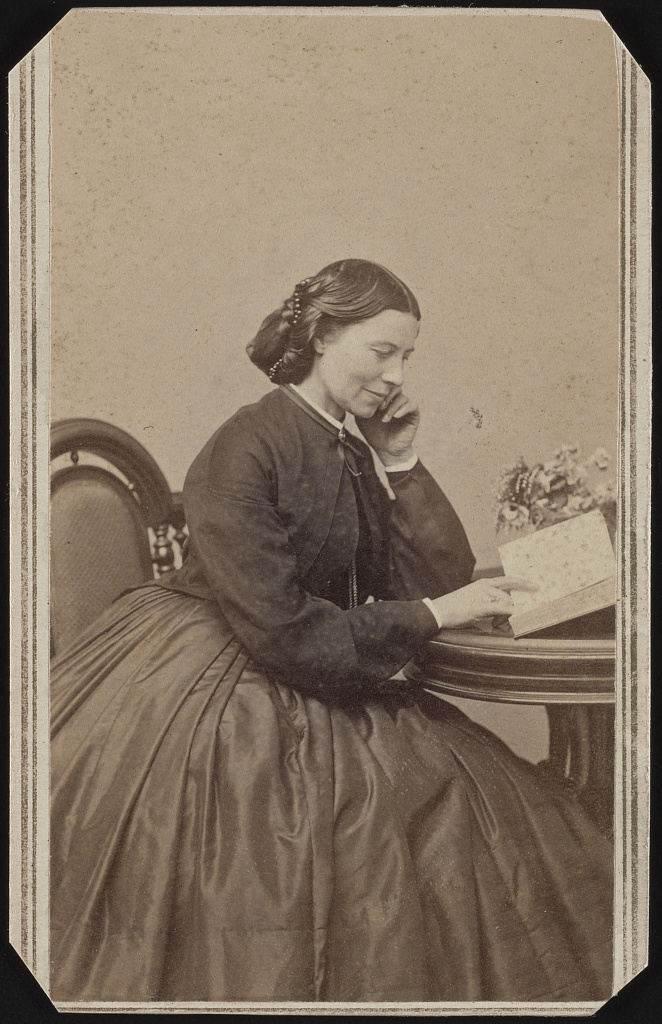
Clara Barton was a Massachusetts nurse who served on the front lines of the Civil War and who founded the American Red Cross, one of the most significant humanitarian organizations in the United States. In between, she spent a curious decade in Dansville, New York, in Livingston County, a period that has largely been overlooked in historical narratives on Barton.
Why Dansville? A Geneseo-based composer, Glenn McClure, is trying to answer that question with a folk opera about Barton’s time in Western New York called Pulling the Thread: A Clara Barton Story. The concept received a $25,000 grant from the National Endowment for the Arts.
Aided by local historians, McClure dug into research, from area historical documents to Barton’s journals, to understand her motivations for settling in the area for a decade. What he found was a compelling story: Barton suffered from what might be considered today as Post-Traumatic Stress Disorder and sought treatment and refuge at Our Home on the Hillside, a popular nineteenth-century water cure and health spa in Dansville.
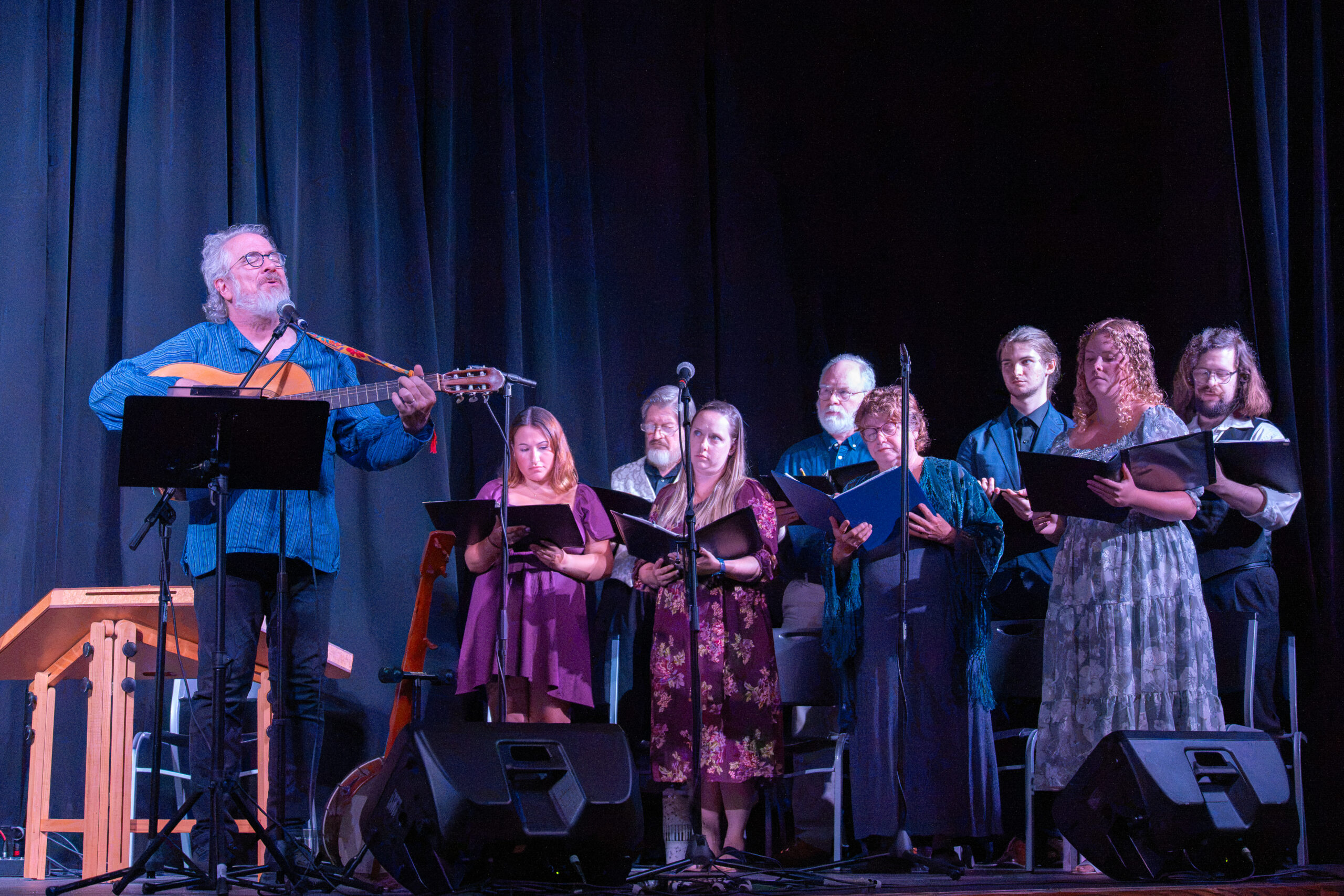
In late August, the Genesee Valley Council on the Arts presented a workshop of McClure’s Pulling the Thread at the Geneseo Riviera based on the historical findings, featuring music and songs that will appear in the full-length opera.
Opera, however, is an unusual format for a story based in rural New York in the nineteenth century. The music heard in rural communities at the time would’ve been local folk music and popular tunes, not operatic music. McClure, however, says he based his conception of the opera on the tradition of European folk opera, in which composers found ripe operatic stories in nationalist folk legends and people, often incorporating folk music into the score and dance on the stage. Operas like Smetana’s The Bartered Bride, Humperdinck’s Hansel and Gretel, and Weber’s Der Freischütz are traditional examples.
“What happens if we revive this European tradition of the rural folk opera and actually use rural areas as laboratories for new work, and especially a new kind of place-based work that has profound American themes to it,” he asked.
It also brings opera to communities that rarely get to experience it.
“We’ve found that we’ve built interest among rural audiences for some of those classical music styles by integrating it into this sort of spectrum of musical styles that are perhaps a little bit more familiar for them.”
McClure’s background positions him well for folk operas. He grew up in York, New York, hearing Scotch-Irish fiddlers and Italian mandolin players at town hall dances, and was exposed to Mexican and Puerto Rican music through his parents’ healthcare work in migrant camps. It wasn’t until fourth-grade band, when he heard the English horn folk song in the largo movement of Dvořák’s New World Symphony, that he understood that folk music could factor into classical music, too. Dvořák famously used folk sources in his compositions, and encouraged American composers to embrace African American spirituals and Native American songs to create nationalist music.
Pulling the Thread, however, is not McClure’s first folk opera. In 2016, McClure created an opera called The Promised Land, set in the Adirondacks, a pre-Civil War story about abolitionists who gave away land to Black Americans so they could meet New York State’s strict land-owning voting requirements. Although first conceived in 2016, the opera received a new libretto by Jarrod Lee and premiered in two acts with the Northern Lights Choir at St. Bernard’s Church in Saranac Lake, New York, last May.
“Here’s this huge story with national implications that comes from a very small town,” he recalled, “and I got very interested in that notion: big stories coming from small towns that require the biggest, most emotionally potent format of storytelling, which is opera.”
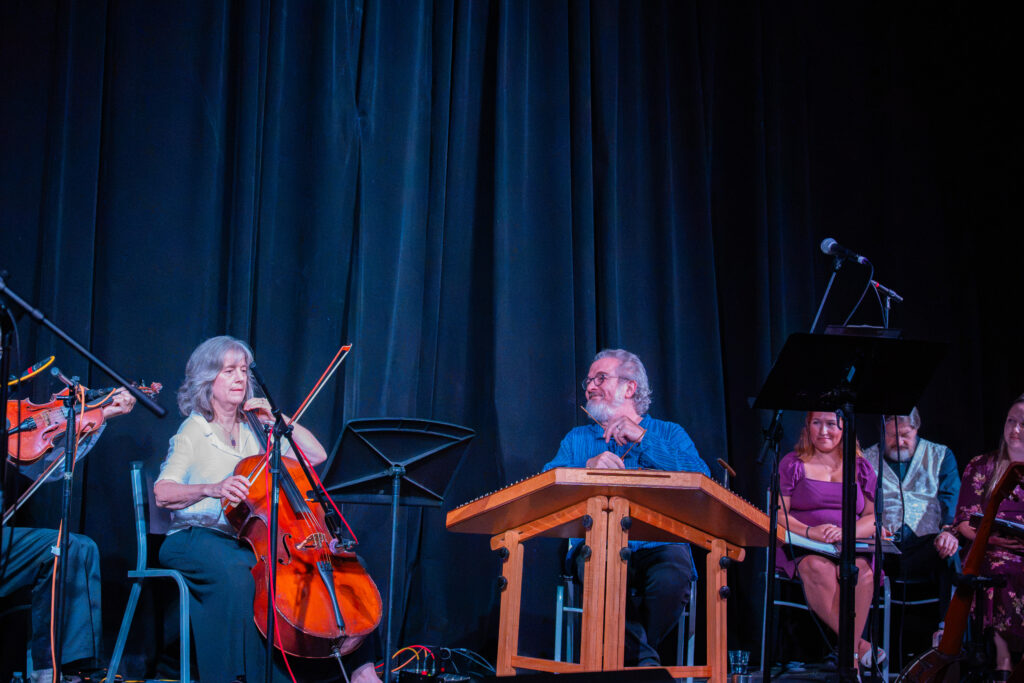
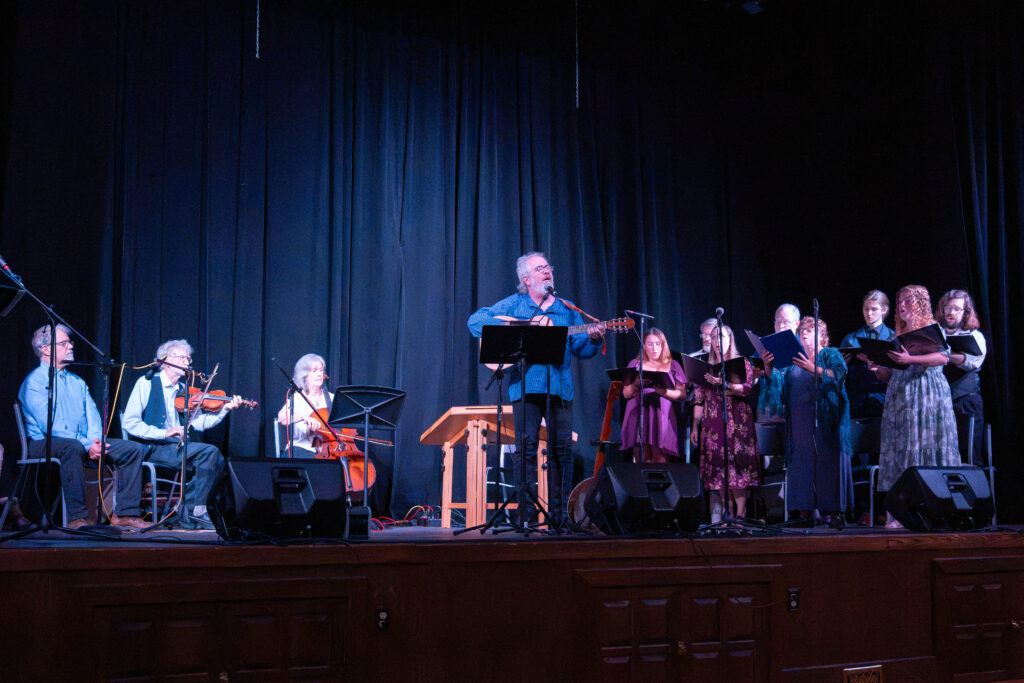
The Pulling the Thread workshop opened with McClure subtly striking a table-like stringed instrument known as a hammered dulcimer, playing folk tunes that Barton might’ve encountered at the time, like Henry Ransom’s Ransom’s Waltz. He was joined by a small folk ensemble that included a violinist, a cellist, and a percussionist. Later, he picked up a banjo and a guitar at center stage while he led a small choir to his left. With the choir, the ensemble performed his original songs for the production, which included “World of Wounds,” a minor blues song about Barton’s feelings of isolation, “I Am No Angel,” an inner-struggle song that refers to Barton’s nickname as “Angel of the Battlefield,” and “Scraps of Our Lives,” a round for the chorus.
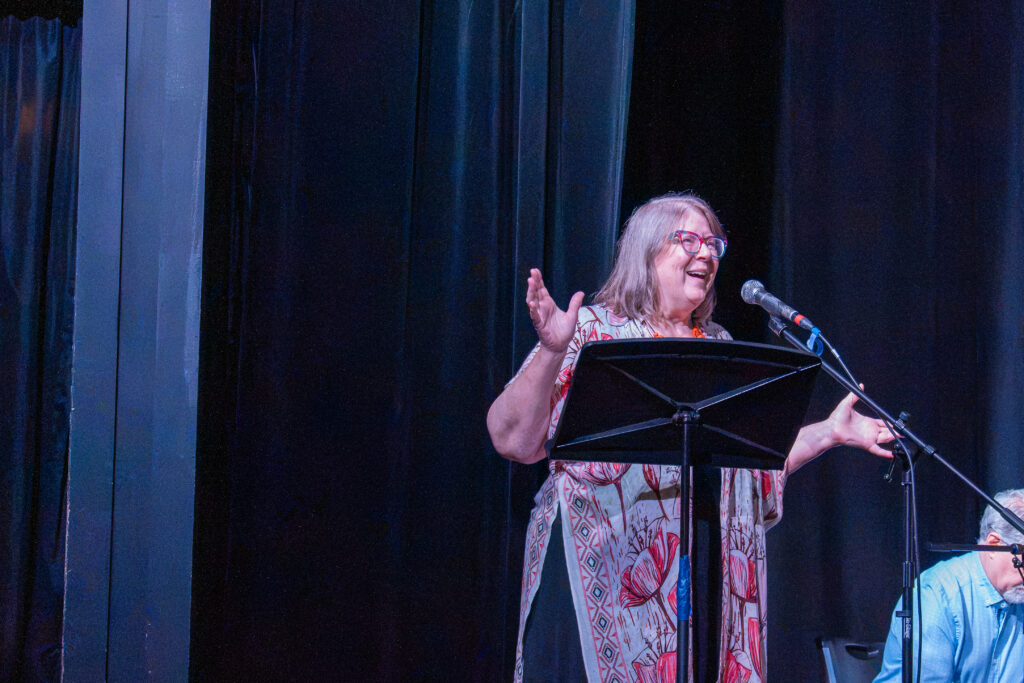
The musical selections were paired with lectures on Barton’s history and the time period. Local historian Jane Oakes detailed treatments at Home on the Hillside; SUNY Geneseo ethnomusicologist James Kimball, whose research focuses on folk music, shared about local music Barton would’ve heard while in Dansville; and Jim DeCamp, a Vietnam veteran, offered a momentary reflection on active combat, which Barton lived through as a frontline nurse.
Absent, however, was a storyline. The workshop concludes the project’s first phase: gathering necessary background and soliciting feedback on the concept. McClure says the next phase will be developing a narrative, writing the libretto, and creating a condensed score. He hopes to present an initial staged reading sometime in 2027.
The story of Barton, whose time in Dansville recovering from mental illness ended with the founding of the American Red Cross, has an emotional core that could make a compelling stage work, but the opera didn’t start with the subject matter. It began with a grant.
To honor America’s 250th anniversary, the National Endowment for the Arts offered grants for 50 arts projects nationally celebrating the contributions of national heroes, part of the ongoing National Garden of Heroes statue garden initiative in Washington, D.C. There was a defined list of approved heroes, and Barton was on it.
When the GVCA saw Barton on the list, it reached out to McClure, a frequent collaborator, to see if he could conceive a work on Barton and turn around a grant application at the same time. He proposed a folk opera, and the project received the $25,000 grant to develop it in January 2026. With Dansville ArtWorks as a fiscal sponsor, the project received additional funding from the Rochester Area Community Foundation through a 2026 Vitality Grant in March.
GVCA’s interim director Karen Canning, who also played cello in the workshop, said the grant was doable because McClure was an easy choice to approach about the project. “We knew he would love the subject matter,” she said at the workshop. “We thought he would be a good fit.”
McClure agrees. “This project has been so rich and deep and challenging,” he said. “It’s an amazing inspirational story of someone who recognizes a mental illness and then does the hard work on it and then comes out of it to create one of the most important public health organizations in the world.”
McClure has other folk operas in works, one of which will get a staged reading at the ESL Rochester Fringe Festival this month. Hephaestus is about the ancient Greek god with a disability, who was rejected by Olympus and redeemed by becoming an artist among mortals on earth. The opera is described as “a jazz-infused, high-energy folk opera romp.” School of the Arts students who participated in the New York State BOOST Grant Summer Program will perform it on Wednesday, September 16, at 6 p.m. in SOTA’s Allen Main Stage Theatre. (Standard tickets are $15 and can be purchased here.)



Be First to Comment