
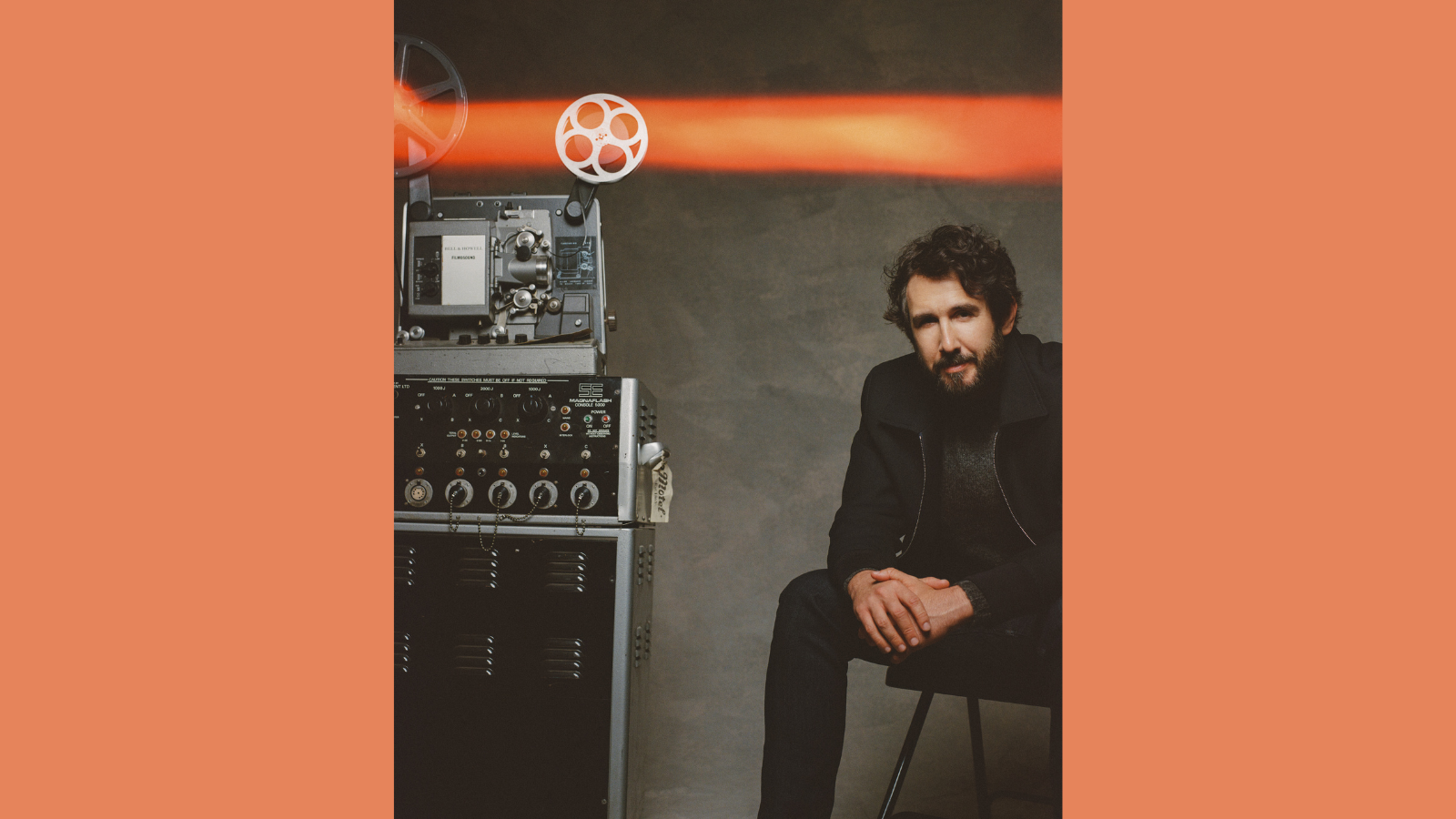
Josh Groban is a multi-platinum recording artist, multi-Grammy-nominated singer, and Tony Award-nominated Broadway actor—and he comes to the Rochester region on Tuesday, August 18 to perform at the Constellation Brands-Marvin Sands Performing Arts Center. He won’t be alone, though, or with a touring band. A familiar group of musicians will be on stage with him: members of the Rochester Philharmonic Orchestra.
 The concert is part of a quick, few-week tour, titled Stage, Screen, and Symphony, that Groban has embarked on this week, during which he sings the soaring motion-picture melodies from his latest album, Cinematic, released in May. But the Sweeney Todd star—who played the titular vengeful barber in the 2023 Broadway revival—will first sing his favorite musical theater selections before intermission.
“Then the sun has set, it’s dark, it suddenly becomes a kind of a different style of show, and we get to sing these grand cinematic songs,” he said in a phone interview.
He’ll perform with new orchestras at every tour stop, including the Philadelphia Orchestra (Saratoga Performing Arts Center), the Chautauqua Symphony Orchestra, and the National Symphony Orchestra (Wolf Trap).
He’s also bringing two guests. Joining him on the first half for Broadway duets is the 2026 Jimmy Award-winning singer Samia Posadas, a recent Arizona high school graduate who is slated to study musical theater at the University of Southern California this fall. It’s a chance to give a young singer a platform, the kind he was given as an unknown teen. For his cinematic selections, he’ll pair up with violinist Lucia Micarelli, a longtime collaborator.
The tour begins on the heels of another 16-show tour with Jennifer Hudson. The singer and actor was also recently honored with a star on the Hollywood Walk of Fame.
Whether you heard Groban on Oprah in the early 2000s, bought one of the 16 million copies sold of his album Closer, or saw one of his more recent Broadway appearances, Tuesday night is a chance to bask in songs sung by one of the most popular singers around.
Rochester Overture editor Anna Reguero spoke with Groban by phone about his current tour and career. The interview has been edited for length and clarity:
AR: Congratulations on the first tour stop in Cincinnati! How did it go?
JG: I was lucky enough to record this new album with a full orchestra in London, and you never forget the feeling of hearing these songs being played that majestically for the very first time. I remember standing in Air Studios and hearing the symphony play these arrangements for the first time. And honestly, being able to stand out there in Cincinnati and hear the symphony play them again just gave me chills all over again. In some ways, it was even more special because it’s in front of an audience. To be able to sing [the songs] live, the way these arrangements were intended, and to do them in venues that really are under the stars and surrounded by nature—I always say it’s like concert summer camp—it is so fun to do these songs that I’ve loved for a very long time. We had a blast.
AR: You’re playing with local orchestras and musicians at each stop on your Stage, Screen, Symphony tour. What does this collaboration with orchestras at each stop look like?
JG: It is always my privilege and excitement to work with the local orchestras because no two orchestras are the same. They all have a different flavor, and a different vibe, and a different way of representing their city musically. And to be able to have that spontaneity, to feel like we’re all going on a new adventure together every gig, is, I think, a tightrope that makes live performance even more special. When you’re working with a new orchestra every night, you’re really listening to each other, and you’re in the zone. And I love bringing that to each audience. And it’s a pride thing for them, for [audiences] to be able to go and see their local orchestra play and hear these songs.
AR: As a singer, how do you approach singing with a full orchestra differently than with the smaller ensembles you tour with?
JG: You have to think about what it is you want to say and do months in advance because these orchestras have big schedules. I’m entering their world, in a way. One difference is that when I’ve got a smaller ensemble, it’s a little easier to say, “Oh, it’s your birthday, come on, strike it out in the key of C.” But the other thing is that there is such an essence of community on stage, standing in front of these orchestras, that it doesn’t feel like this is a solo concert. We’re all performing these songs together. There’s a swell of sound that is very apparent when I’m up there—especially with these venues that have wonderful acoustics and with these orchestras that are so accustomed to performing in their homes here—that when I walk out and I’m in front of this orchestra, I feel like I’m a member of their group. It is all of our jobs to ride that wave together and to click. There’s a lot of listening that has to go on with every member of the orchestra and me to make sure that these sometimes very complicated arrangements and orchestrations all flow in the direction we want them to flow.
AR: You’ve described your voice as a “tenor in training” earlier in your career. Where does your voice sit now?
JG: I was still very much trying to figure out, as anybody is at that age, “Where do I fit? What is my range? What am I supposed to be singing?” Because when you’re young, you really can just do anything through sheer youth. And I think as you get older, your body doesn’t lie, your throat doesn’t lie, and you start to realize kind of where your sweet spot is. And so, I’ve really embraced the warmth in my voice that really wants to naturally be there. And I would say I’m definitely more of a high baritone now than a full-on tenor. Although I do pop out those notes on stage.
AR: I was thinking about your career longevity. You’ve done the more pop stuff; you’ve done classical; you’ve done Broadway—you’ve done so much. Tell us about your trajectory as an artist, and the difference between you as a teenager on Ally McBeal versus you today.
JG: I think the difference, certainly emotionally, is that all the nerves that I had when I was younger were fear-based because there was so much unknown and there was so much inexperience. I didn’t know what was ahead of me, and I didn’t know if things would continue, or if I would do a good job, or if I would hit the notes. I was just a bundle of nerves. And as I’ve gotten older, and as you get through the hard moments, you realize that the nerves are just a desire to be out there. And I have just grown into having so much fun, realizing that the nerves are because you care. The other thing that’s changed a lot is that when I was younger, there was more gatekeeping in the music industry. You really had to fit into one lane. And all the versatility that I had as a young kid, I felt was a liability. Throughout the next many years, I started to learn that it’s not a bad thing that you can express yourself in all kinds of different ways and challenge yourself and go on these many different branches of journeys. And in fact, it might even be a positive. And I think the more I decided to take risks and try different things and explore different creative paths, the more nuanced and, honestly, the more rewarding my career has been. And I think it’s been the reason why I’ve been able to do it so long.
AR: You’re able to balance pop, classical, Broadway, all kinds of styles with your voice, which seems difficult. How are you able to strike such a balance, and how do you train your voice across styles?
JG: Honestly, it would be more difficult for me to just go fully into one world or the other. If I had to go out and sing the kind of music that Benson Boone or Justin Bieber does, I’d have a hard time. If I had to go out and sing a Wagnerian aria, I’d have a hard time. My voice has naturally felt comfortable straddling both worlds. The fact that you know I’m flipping from one style to another, I still want it to feel like my voice and my expression and lean into the fact that my voice has never just been one thing. That’s where it’s comfortable.
AR: A special question for Rochester audiences: What is it like to sing and work with Renée Fleming?
JG: Renée is one of my absolute favorite people in the whole world. When I talk about the greats and what makes the greats great, I always say, whether it’s someone like Renée Fleming or Tony Bennett or Aretha Franklin, that they all continue to be students. They are so endlessly curious about different styles of music, about different ways to use their voices and express themselves. And Renée Fleming is already one of the greatest sopranos who’s ever lived. Full stop. The fact that she also continues to explore other worlds, that she’s interested and non-pretentious about exploring those other worlds, she’s such an inspiration to so many. And I also just so appreciate her love of arts education and art on the brain. I think she’s done so much research on the ways in which art heals us, both mentally and emotionally. We had the great privilege of having her at my arts education gala last year, and we were able to honor the great work that she’s done. I’m just proud to call her a friend and have been lucky to record with her a couple of times.
Josh Groban: Stage, Screen, and Symphony
Tuesday, August 18 at 7 p.m.
Constellation Brands-Marvin Sands Performing Arts Center (CMAC)
Tickets range from $45.30 to $254.05 and are available at Ticketmaster.
Hear Josh Groban perform with Renée Fleming, a Churchville native and Eastman School of Music alumna:
Listen to Groban’s latest album, Cinematic, on Spotify:
—
Featured photo: Jennifer McCord







Be First to Comment