
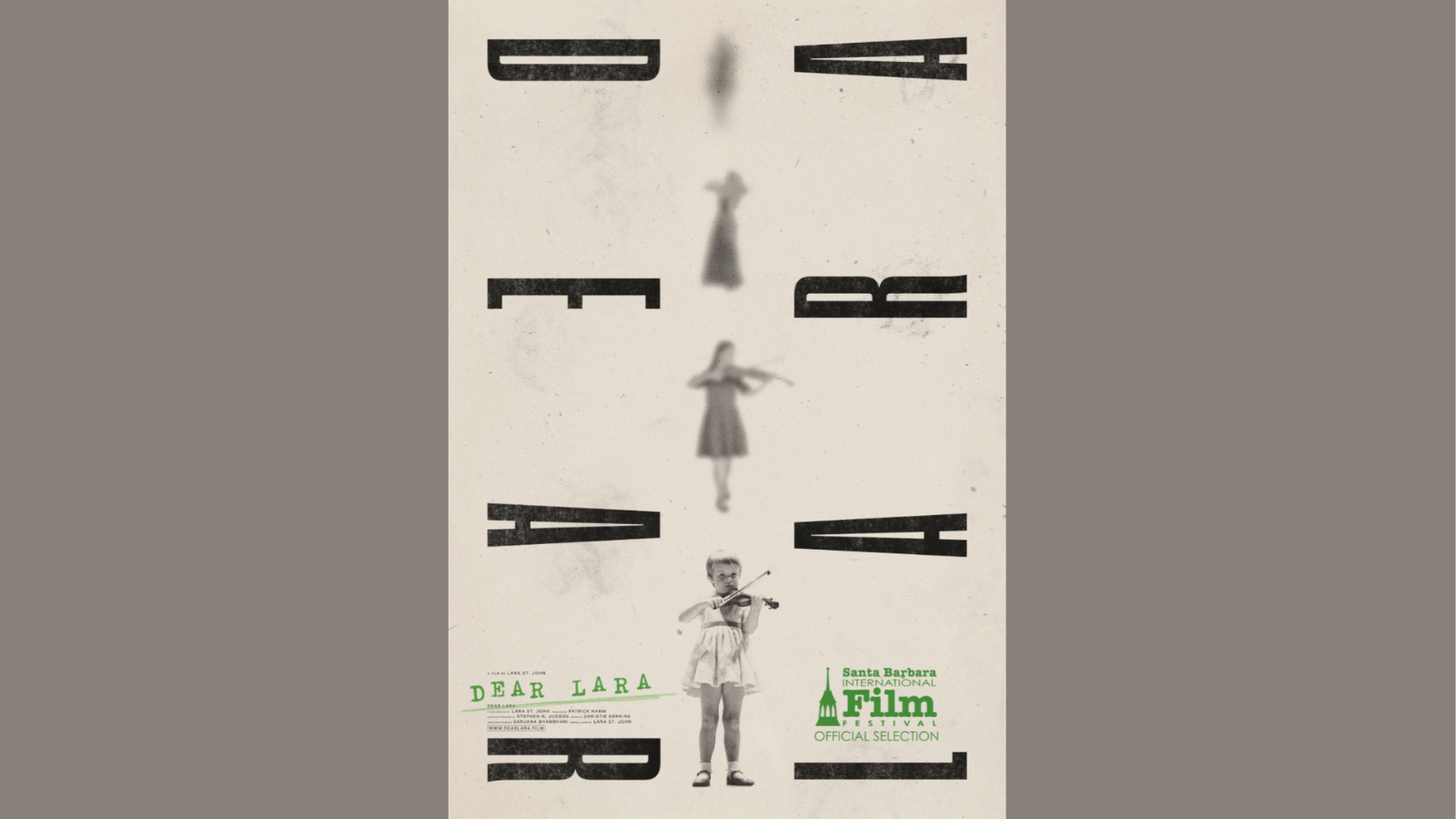
When virtuoso violinist Lara St. John went public in 2019 with her account of sexual assault and rape by her Curtis Institute of Music private violin teacher, the late Jascha Brodsky, which began when she was 14 years old, she received a deluge of letters from other women and some men who experienced similar abuse across their classical music training and within their professional environments.
Those letters inspired her to create a documentary film, Dear Lara, about broader patterns of abuse in classical music. The film, which premiered earlier this year at the Santa Barbara International Film Festival, has since screened at festivals, universities, and cultural institutions across North America and Europe.
Tomorrow, Saturday, October 10 at 3:30 p.m., The Little Theatre will screen the film as part of the WXXI Classical Presents film series. The film will be followed by a panel discussion with filmmaker St. John and Baltimore Symphony Orchestra principal oboist Katherine Needleman, who is also an activist for gender equality in classical music. St. John and Needleman will speak via Zoom. WXXI music director, host, and producer Mona Seghatoleslami will moderate the discussion.
“I think people don’t realize how prevalent this is,” says Seghatoleslami, who organized the film screening. “They think it’s a few bad actors, and the idea is that they are bad actors within a system that holds this up.”
In the documentary, St. John’s first-person story is intertwined with stories and interviews with eight survivors of abuse, supported by archival materials. Additionally, St. John interviews music journalists, administrators, and a legal scholar and child-protection advocate.
The film emphasizes that even when young musicians reported abuse, their perpetrators received few consequences. The offenders kept their teaching and playing positions and maintained their overall professional standing. For example, when pianist Lusiana Lukman reported sexual abuse at the Royal Conservatory of Music in Toronto by her teacher, Boris Berlin, an administrator offered to change her teacher and nothing more.
The story, first reported in February by The Toronto Star, prompted the respected pianist and RCM faculty member Jonathan Biss to resign from his teaching position at the college, criticizing the conservatory for its inadequate response.
Meanwhile, the victims of abuse—mostly female, but not exclusively—suffered. Lukman reports carrying a great amount of shame. But one devastating story is told by the fiancé of cellist Robie Brown. In the documentary, Frank Powedermaker shares that his wife Brown was raped by her violin teacher, violinist Rafael Druian, at only eight years old. Brown died by suicide at 34. Her widow connects Brown’s death to the abuses she suffered as a child.
“Music is so sacred and special to so many people,” says Seghatoleslami. “And to put this in between someone and their experience of music to me feels particularly heartbreaking.”
A counselor from RESTORE Sexual Assault Services will be in attendance at Saturday’s screening at The Little Theatre to speak with anyone who may need support.
Classical music is a ripe environment for abuse, particularly of minors and young adults, because of its mentor-mentee model. Starting at a young age, musicians study privately with a teacher.
Seghatoleslami emphasizes, “Although math teachers can be predators, you don’t often have one-on-one lessons from a young age with a math teacher.”
Misconduct and more can go unchecked, as it did at the Interlochen Center for the Arts in Michigan, which released a 97-page report in July that outlined roughly 70 firsthand accounts of sexual abuse by 47 adults affiliated with the school. The report covered the period from the 1950s through the 2010s.
Pianist Biss wrote in a New York Times op-ed published in August that the God-like status afforded to music teachers reinforces abuse. In professional preparatory music training, as in music schools and conservatories, teachers often hold the key to contacts and other professional opportunities. Reporting a teacher could mean jeopardizing a career.
The film is especially topical in Rochester. Former Eastman School of Music doctoral student Rebecca Bryant Novak publicly claimed on her Substack in April 2024 that she experienced retaliation for reporting her conducting professor, Neil Varon, for sexual harassment and abusive behavior she experienced, reported six weeks into starting her degree in 2023. By the end of February 2025, the school expelled her.
Eastman cited insufficient academic progress for the expulsion, and the university has since responded that it complied with state and federal laws in handling Novak’s complaints.
Bryant filed a retaliation and unlawful expulsion complaint against Eastman and the University of Rochester with the New York State Division of Human Rights, supported by the Foundation for Individual Rights and Expression (FIRE). That complaint remains unresolved.
“The culture that Dear Lara exposes is alive and well within Rochester’s own city limits,” says Bryant. “My experience at Eastman revealed the same dynamics the film brings to light.”
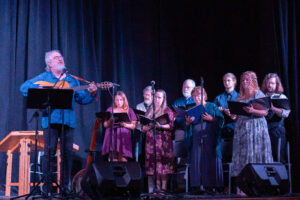
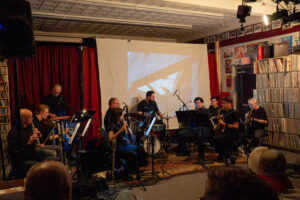
Filmmaker and violinist St. John, along with oboist and activist Needleman, joined Bryant at the Hochstein School of Music for a November 2025 concert sponsored by FIRE in which Bryant conducted works threatened by censorship, including Shostakovich’s Symphony No. 5.
Needleman, who joins Saturday’s post-film panel discussion, said she was honored to support Novak.
“It is worth noting that Dear Lara’s first Rochester screening happens outside of the major music school and symphony orchestra in Rochester, which are, ironically, the places which would likely benefit most from it,” Needleman wrote by email. “One might think that Eastman screening the film and requiring attendance from their students could be a first step in a P.R. disaster recovery plan, but most organizations, as detailed in the film, only vow to do better when their level of public embarrassment hits eleven.”
The Rochester Philharmonic Orchestra declined to comment, and the Eastman School of Music did not respond to a request for comment by publication time. (Rochester Overture will update this article with any developments.)
“I hope the film inspires the community to have a serious conversation about accountability and safety in its own musical scene,” Novak concluded.
The Little Theatre screens “Dear Lara” on Saturday, October 10 at 3:30 p.m., followed by a post-film panel discussion. General admission is $10, with discounts for members, military, and seniors. Tickets can be purchased here.
Disclosure Statement: Author Anna Reguero maintains freelance contracts with the Rochester Philharmonic Orchestra and the Eastman School of Music. See our Ethics Policy.



Be First to Comment