
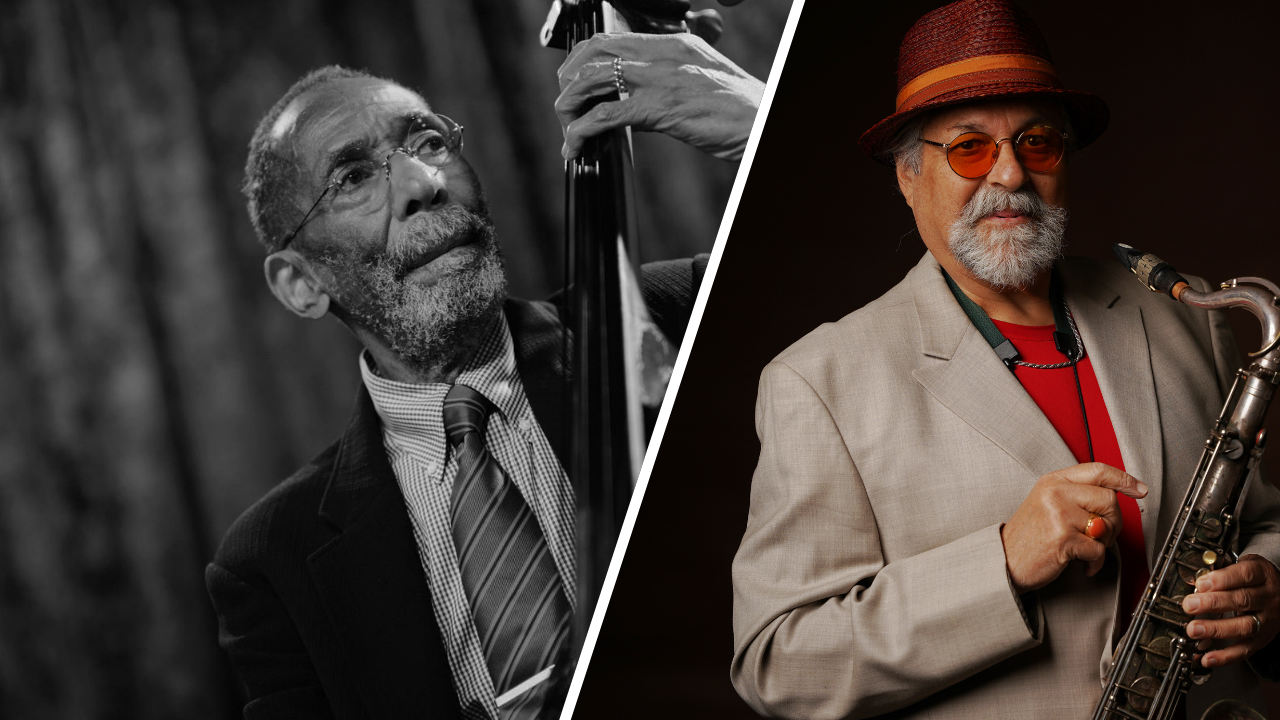
Rochester is celebrating the centennials of two jazz pioneers, Miles Davis and John Coltrane, next Friday, June 19. It’s both Juneteenth and the opening night of the Rochester International Jazz Festival.
The jazz festival pays homage to the tenor sax legend Coltrane on the Kodak Hall stage at Eastman Theatre at 9:30 p.m., with a congregation of tenor saxophone giants led by Joe Lovano. Lovano, whose tenor sax-playing father sat in with Coltrane back in the 1950s, has been touring around a program called Coltrane 100. Even more, a special 97-year-old guest brings a connection to Coltrane’s music that has accumulated a mythological status in jazz circles.
But first, a musician who was a direct collaborator and essential element of Davis’s legacy will perform earlier in the evening. Double bassist Ron Carter, who is one of two living members of Davis’s second great quintet, will perform at 6 p.m. with his Foursight Quartet.
Except he won’t be at the jazz festival.
Carter is playing down the street at the Hochstein School of Music Performance Hall, a roughly 20-minute walk from Jazz Street. The concert is part of RocJuneteenth events.
“Got a bit of competition, of course, but that’s business,” says Rochester International Jazz Festival Co-Producer John Nugent. “He’s a legend, there’s no doubt about it. He was a part of playing with all those great players.”
These two events on the same day would be a stroke of luck if not for the jazz festival. The festival already boasts a packed schedule that night, with artists such as Danilo Pérez, Catherine Russell, the Rodriguez Brothers (performing a tribute to Davis’s Afro-Cuban forays, which reprises on Saturday), and Brandon Woody’s Upendo (which you can read more about here). But anyone willing to forego some of their jazz festival experience would gain the chance to hear living legends before they, too, become consigned to history.
Ron Carter Celebrates Miles Davis and Juneteenth
Carter nearly missed his chance to play with Miles Davis.
The then twenty-five-year-old bassist—an Eastman School of Music alumnus, graduating in 1959—was playing a two-week residency with trumpet player Art Farmer in 1963 at the Half Note club in New York City when Davis asked Carter to sub in with his band for a tour. In a potentially career-shattering move, Carter answered that he first had to ask his boss.
As for Davis, who already shook up the jazz world with his original quintet’s post-bop sound (which included Coltrane)? He probably chuckled at Carter’s naivety.
It was in Davis’s quintet that Carter endeavored to “make the bass visible to the ear” by elevating his instrument’s role from timekeeper to integrated creative partner.
“As I played more and more, I understood the role the bass can play in the band more and more,” he wrote by email. “The longer I played, the more convinced I became of the bass’s importance to any genre of music, any size band.”
Part of the bass’s visibility, though, was in Carter’s openness in experimenting with how microphones and pickups could be positioned to capture the bass’s full range on recorded albums. The most recorded bassist in history, Carter credits recording engineer Rudy Van Gelder, who recorded many of Davis’s foundational albums in the 1950s, as well as Carter’s debut album, Where? (Prestige/New Jazz), from 1961.
“I spent many hours in Rudy’s studio figuring out the best way to make the bass as present on a recording as it can be in a club,” he remembered.
(Van Gelder also served as recording engineer for all of Coltrane’s Impulse! Records albums including A Love Supreme, released in 1965, and Ascension in 1966.)
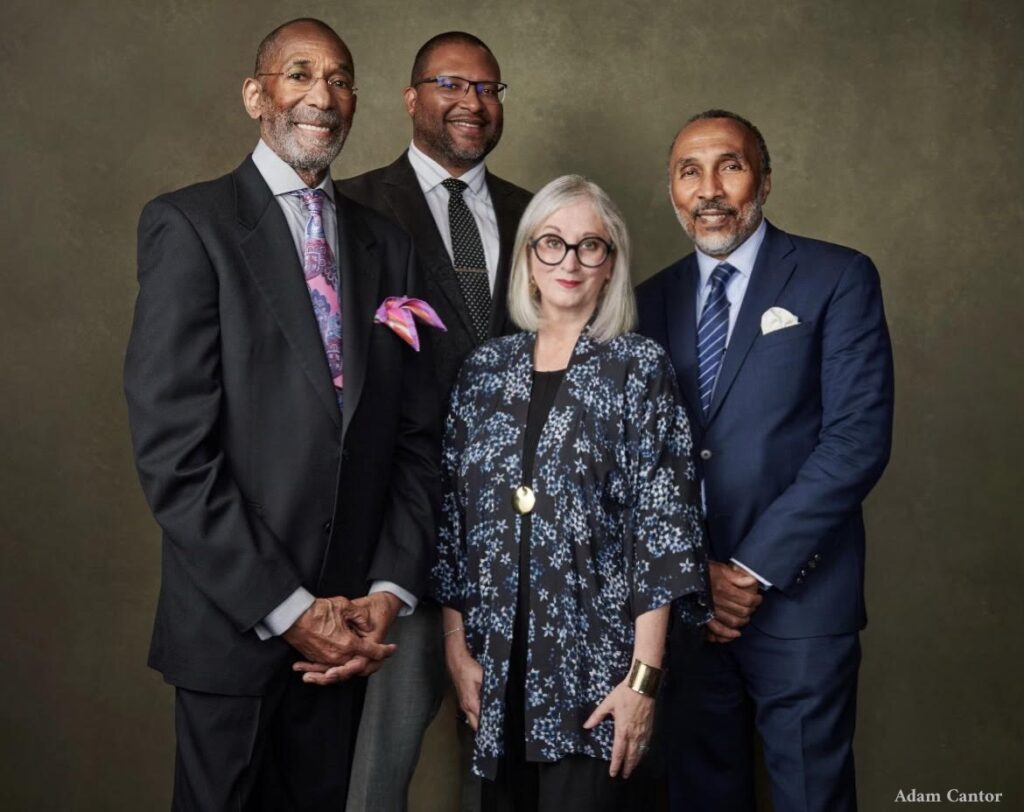
Now at 89-years-old, Carter pays tribute to Davis through his current Foursight Quartet, an ensemble that Carter calls his “crowned jewel.” Foursight includes Renee Rosnes on piano, Jimmy Greene on tenor sax, and Payton Crossley on drums. And despite Carter’s expeditions into hip-hop and, more recently, gospel music, Foursight is a return to the elegance and versatility of a classic jazz quartet. It’s also a chance to hear the legacy that Carter wants to leave us all with.
That the concert is taking place on Juneteenth isn’t an accident. It’s the point. And it’s a poignant one, given the systemic racism Carter encountered at the Eastman School of Music and as the first black musician to play in the Rochester Philharmonic Orchestra. Carter spoke out about his experiences in the PBS documentary Ron Carter: Finding the Right Notes and in his autobiography of the same name.
Now, Carter holds an honorary doctorate from the University of Rochester, was inducted into Rochester’s Music Hall of Fame, and has an official day named after him—August 9—by the City of Rochester.
The message of Juneteenth is amplified by the concert’s celebration of Davis’s 100th birthday. Davis was a victim of an incident of police brutality and used his platform and music as his voice, refusing to play in segregated venues and turning his back to audiences in clubs, so as not to perform the ‘Black entertainer’ stereotype.
“My wish is that the people who attend this celebration understand the history that is behind the celebration,” wrote Carter. He also hopes Rochester’s audiences will go beyond the sounds, and “understand the emotion behind it. Then we have done our musical job.”
The concert also serves as a fundraiser for the Black Community Focus Fund, supporting the development and preservation of the Minister Franklin D. Florence Civil Rights Heritage Site at Baden Park.
Notably, Carter is the only Black musician featured in June’s Rochester concerts devoted to Davis and Coltrane, including at the jazz festival.
Tenor Madness
On the surface, the Joe Lovano concert on the jazz festival’s opening night, celebrating Coltrane’s soon approaching 100th birthday in Kodak Hall at Eastman Theatre, looks like a tenor saxophone party. Four monster tenor sax players are on the bill to share the stage. But there are surprising connections to Coltrane’s music, thanks to a special guest joining the program: The 97-year-old saxophonist Frank Tiberi brings the total tenors to five.
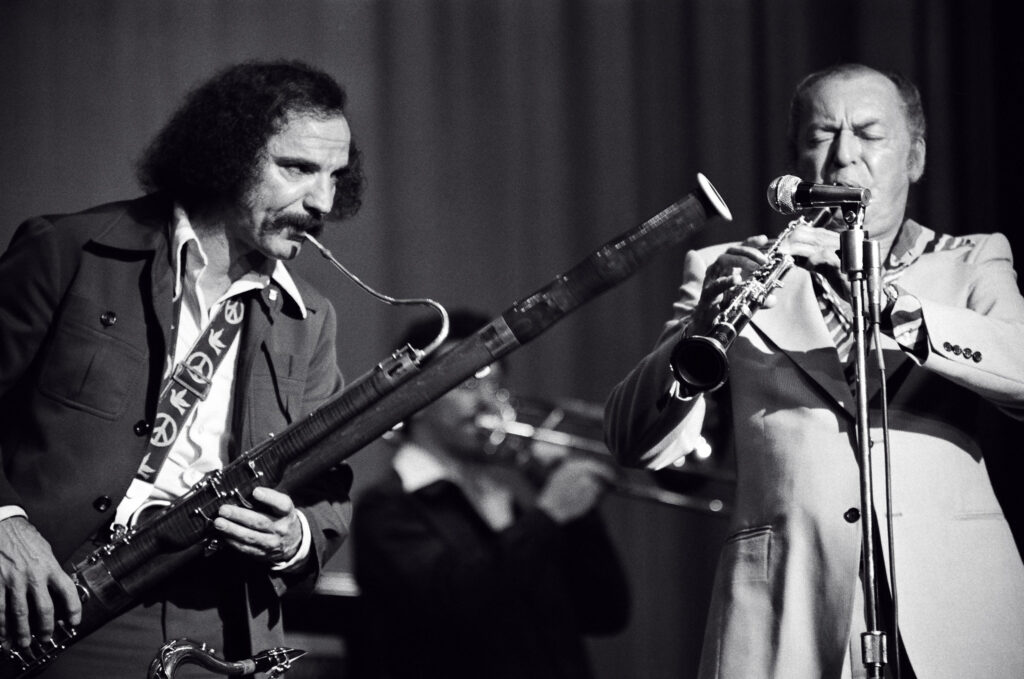
Tiberi joined the Woody Herman Orchestra in 1969, after which he encouraged the big band to go beyond its swing roots and incorporate more contemporary music, including charts of Coltrane tunes and more stylistic variety, such as rock and fusion. He then inherited the band from Herman in 1987, right before the clarinetist and bandleader’s death. Tiberi still leads the band’s current incarnation.
But Tiberi’s name has been whispered for decades among jazz circles, and it’s for more than his playing. It’s for the over 60 hours of bootleg recordings he made of Coltrane’s playing across clubs in Philadelphia and New York in the 1960s. With a Magnavox TR-100 reel-to-reel tape recorder under his coat, he snuck the now ancient recording equipment into clubs and captured the saxophone legend in his most unrestrained element.
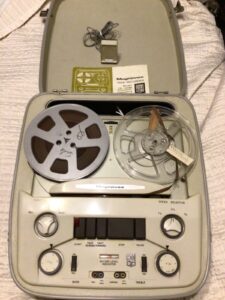
Always kept in Tiberi’s private collection, the recordings amassed what many consider a mythological status.
“I was pretty selfish,” Tiberi said by phone. “I just wanted to keep them to myself to absorb as much as I could.”
The recordings contain clues to Coltrane’s unique approach to harmony, particularly Coltrane’s technique of traversing the twelve chromatic pitches to create a rich network of geometrically organized patterns and relationships. Hear Coltrane’s “Countdown” or “Giant Steps” from 1959 for an auditory example. Tiberi has used his findings from his bootlegged tapes to teach his students at the Berklee College of Music, where he has been a longtime faculty member, how to “do really colorful things before going to a chord.”
Tiberi handed the recordings over to Verve/Impulse! Records in 2000, hoping they’d finally be released. But due to the tapes’ variable sound quality, initial interest faded, and they remained concealed.
But those recordings will finally be heard by the public in September when Verve/Impulse! Records (imprints now under Universal Music Group) releases the mastered tapes for Coltrane’s centennial. A preview has already surfaced.
Listeners have our jazz festival’s co-producer, John Nugent, to thank for it.
A member of Herman’s big band with Tiberi in the 1980s, Nugent’s producer-level connections helped him broker an arrangement with Impulse! Records/Verve/Universal and untangle the legalities to ensure Tiberi’s historical tapes could be heard by all.
“It took me 30 years to make this happen for Frank and for the music industry,” says Nugent. “I wanted this music to come out. I didn’t want it to be buried with Frank when he passes away.”
“He was pretty much the go-getter,” Tiberi says about Nugent.
Some might complain that the recording quality is inferior for a commercial release. But it took a tremendous effort to capture what Tiberi did.
“I was doing everything blindfolded,” Tiberi says about trying to evade discovery by the clubs. “And I was threading them, and I was switching and turning them, doing everything blindfolded. There’s a lot of cut-offs because he played the tunes too long. He was in a situation where he wasn’t concerned about whether or not people wanted to hear a tune that’s 20 minutes long.”
Tiberi will showcase the musical lessons learned from his tapes in performance on Friday, June 19.
“I’m looking forward to it if I can maintain and use enough breath,” he says. “Just being 97 years old is a situation in which it becomes an effort.”
No stranger to our jazz festival, Lovano—who also served as a member of the Herman big band for a few years, sitting next to Tiberi—leads the concert. Tiberi remembers Herman asking if he should hire Lovano after he sat in, and all Tiberi had to say was, “Did you hear his solo?”
Other players include Tiberi’s dear Boston-based friend George Garzone, with whom he has performed and recorded. Jerry Bergonzi, a longtime member of Dave Brubeck’s quartet, is another of Tiberi’s collaborators. Rounding out the group is the great Scottish tenor, Tommy Smith. Nugent is often known to join his friends on stage at the jazz fest, so it’s anyone’s guess if the night might culminate with not five wailing tenor saxophones, but six.
Continued Celebrations
The Coltrane at 100 celebrations continue throughout the festival.
On Saturday, June 20, Scottish sax player Tommy Smith sticks around from his Friday night concert to play with pianist Jon Ballantyne, another one-time member of the Herman big band and a two-time Juno Award winner. Titled “Sketches of Trane,” they will take a swinging and improvisatory approach to honoring the jazz giant.
Coltrane’s spiritual journey will get even more meditative when the Coltrane Sutras, with saxophonist brothers Jonathan and Andrew Kay, fuse Coltrane’s music with North Indian classical music traditions and other world sounds on Wednesday, June 24.
Closing out the centennial concerts is “Trane of Thought” with saxophonists Pat LaBarbera and Kirk MacDonald, who have been jointly celebrating Coltrane’s birthday since 1992. The two players created an annual Coltrane birthday event at the Rex Hotel Jazz & Blues Bar in Toronto that not only has a dedicated following but is still ongoing. They bring that show to the Inn on Broadway for the jazz fest on Thursday, June 25.
See the full schedule of the Rochester International Jazz Festival’s Coltrane at 100 performances here.
—
Ron Carter and his Foursight Quartet
Friday, June 19 at 6 p.m. | Tickets are $65
Hochstein Performance Hall, 50 N Plymouth Ave
Celebrating John Coltrane w/ Joe Lovano + Special Guests
Friday, June 19 at 9:30 p.m. | $40 cash at the door or Club Pass entry
Kodak Hall at Eastman Theatre, 26 Gibbs St.
—
Featured photo of Ron Carter by Pete Coco
Featured photo of Joe Lovano by Aquapio Films Ltd





Be First to Comment